How to Ship Electronics to the Dominican Republic Without Issues
How to Ship Electronics to the Dominican Republic Without Issues
Electronics are some of the most popular and most problematic items people try to send overseas. A new laptop for a family member, a gaming console for a nephew's birthday, or a batch of phones for a small business can all turn into a logistical headache if you don't understand how customs, packaging, and carrier rules actually work. Electronics get held up, taxed unexpectedly, or even returned to sender far more often than clothing, books, or household goods, simply because they're high-value, battery-powered, and tightly regulated.
The good news is that shipping electronics doesn't have to be stressful. Once you understand the rules and prepare your shipment correctly, the process becomes predictable. This guide walks through everything you need to know, from choosing the right shipping method to avoiding the customs mistakes that trip up first-time shippers.
Why Electronics Require Extra Care
Electronics sit in a different category than most consumer goods for a few reasons. First, they're expensive relative to their size and weight, which means customs authorities pay closer attention to declared values. Second, many devices contain lithium batteries, which are classified as hazardous materials by international shipping standards and come with their own packaging and labeling requirements. Third, electronics are frequently targeted for theft or tampering in transit, so how you pack and insure them matters more than it would for, say, a box of clothing.
None of this means electronics can't be shipped safely. It just means the margin for error is smaller, and a little preparation goes a long way.
Step 1: Choose the Right Shipping Method
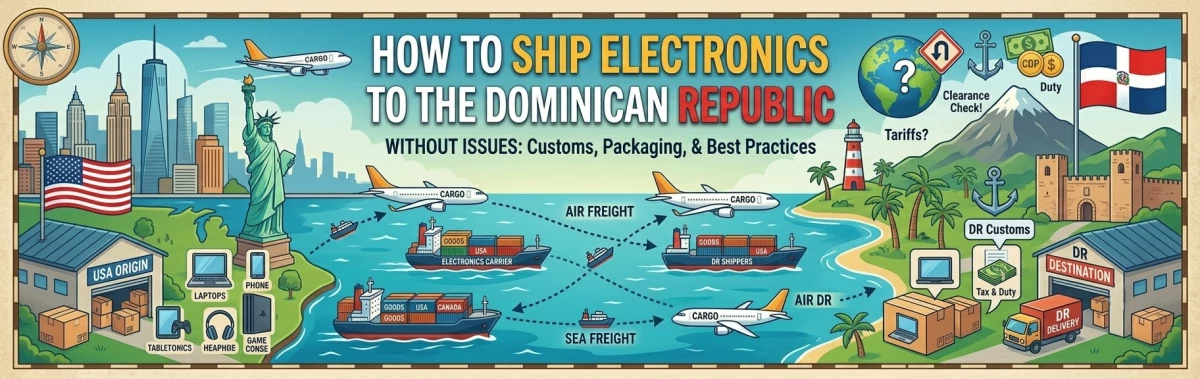
Your shipping method depends heavily on what you're sending and how fast you need it to arrive. For a single laptop, phone, or small gadget, air courier services tend to be the fastest and most reliable option, even though they cost more per pound than ocean freight. For larger quantities, such as several TVs, multiple computers, or business inventory, ocean freight in a consolidated container often makes more financial sense, even though transit times stretch into weeks rather than days.
If you're an online shopper rather than a business, services that let you buy and ship from US to Dominican Republic are worth exploring. These services give you a US-based address, let you shop from any American retailer, and consolidate your purchases into a single international shipment. This is especially useful for electronics, since many manufacturers and retailers either don't ship internationally at all or charge inflated international shipping rates directly at checkout.
Step 2: Understand Dominican Customs Rules for Electronics
Every package entering the Dominican Republic passes through customs, and electronics are scrutinized more closely than most categories. The Dominican customs authority (DGA) assesses import duties and taxes based on the declared value of the item, the applicable tariff classification, and whether the item falls under any special licensing requirement.
Most personal electronics, like laptops, phones, tablets, and cameras, are legal to import but subject to duty. Duty rates vary depending on the specific product category, so a phone and a desktop monitor might be taxed differently even though both are "electronics." As a general rule, expect to pay a percentage of the item's declared value in duties, plus the standard ITBIS (the Dominican Republic's value-added tax), which currently sits at 18% on most imported goods.
Two mistakes account for the vast majority of customs delays. The first is underdeclaring value to reduce duties, which customs officers are trained to spot and which can result in your shipment being seized, fined, or returned. The second is failing to provide a clear, specific description of the item. Writing "electronics" or "gift" on a customs form is a red flag; writing "one (1) Dell laptop, model XPS 13, value $650" is exactly what customs wants to see.
Step 3: Package Electronics Correctly
Proper packaging protects your shipment both physically and administratively. Physically, electronics need cushioning that prevents movement inside the box. Bubble wrap, foam inserts, or the original manufacturer's packaging all work well. Avoid loose packing materials like shredded paper, which shift during transit and leave gaps where impact damage can occur.
Administratively, batteries need to be handled with care. Lithium-ion batteries installed inside a device (like the battery in a laptop or phone) are generally fine to ship under standard rules, but loose, spare batteries often require separate declaration and special packaging because of fire risk during air transport. If you're shipping a device with a separate battery pack or extra batteries, check with your carrier beforehand, since some couriers restrict or refuse loose lithium batteries entirely.
Original boxes with manufacturer barcodes and printed specifications also help speed up customs inspections, since they give officers an immediate, verifiable description of the contents without needing to open the package.
Step 4: Get the Documentation Right
Every shipment needs an accurate, itemized customs declaration. For electronics specifically, include the brand, model number, serial number if available, and an honest declared value based on what you actually paid or what the item is genuinely worth. Keep your purchase receipt or invoice on hand, since some shipments are flagged for additional documentation before they're released.
If you're shipping a refurbished or used device, note that on the declaration as well. Used electronics are sometimes taxed differently from new ones, and accurately describing the condition avoids disputes later.
Step 5: Decide Between Express Courier and Consolidated Freight
For most individuals sending one or two electronic items, express courier services (DHL, FedEx, UPS) offer door-to-door delivery with full tracking and relatively fast customs processing, since these carriers have established relationships with Dominican customs and handle the paperwork on your behalf. The tradeoff is cost—express shipping is rarely the cheapest option per pound.
If budget matters more than speed, freight forwarders that specialize in consolidating multiple customers' packages into a single shipment can offer a genuinely cheap parcel to the Dominican Republic, especially for non-urgent electronics. The savings come from shared container space, but you'll trade speed for cost, with delivery windows often running one to three weeks longer than express options.
Step 6: Insure High-Value Items
Electronics are exactly the kind of cargo that benefits from shipping insurance. Most carriers offer optional coverage based on declared value, and for anything over a couple of hundred dollars, it's worth the relatively small added cost. Insurance protects you against loss, theft, or damage in transit, and without it, you have very limited recourse if something goes wrong between pickup and delivery.
Common Mistakes to Avoid
A few recurring issues account for most electronics shipping problems. Declaring a value far below the item's actual worth invites customs scrutiny and potential penalties. Shipping loose batteries without checking carrier restrictions can result in the package being held or refused outright. Vague item descriptions slow down inspections and increase the odds of a manual review. Skipping insurance on expensive items leaves you exposed if the package is lost or damaged. And choosing the cheapest possible carrier without checking their track record for electronics specifically can mean longer delays or rougher handling than a slightly pricier, more specialized option.
Final Thoughts
Shipping to Dominican Republic doesn't have to be unpredictable, even when the cargo is as sensitive as electronics. The key is treating customs paperwork, packaging, and carrier choice as equally important parts of the process rather than afterthoughts. Accurate declarations, solid packaging, and the right shipping method for your timeline and budget will get your devices to their destination without the delays or surprise fees that catch unprepared shippers off guard.
If you want a partner that handles the details for you, Zion Shipping specializes in getting electronics and personal purchases from the US to the Dominican Republic safely, affordably, and without customs headaches. Whether you need a fast courier option or a cost-effective consolidated shipment, Zion Shipping can help you choose the right method and walk you through the paperwork from start to finish. Get a quote from Zion Shipping today and ship your electronics with confidence.
Also Read: How to Send a Box to the Dominican Republic
Frequently Asked Questions
1. Can I ship a used laptop or phone to the Dominican Republic?
Yes, used electronics can be shipped, but you should declare them as used and provide an honest valuation. Customs may apply different duty calculations to used items compared to new ones, so accurate labeling helps avoid disputes at the border.
2. Do I have to pay customs duties on a phone sent as a gift?
Generally, yes. Gifts are not automatically exempt from duties in the Dominican Republic, though very low-value items sometimes fall under simplified processing. It's best to declare the item accurately and budget for potential duty and tax charges regardless of the gift framing.
3. Are there restrictions on shipping laptops with lithium batteries?
Batteries installed inside a device are typically fine under standard shipping rules. Loose or spare lithium batteries, however, often require special handling, separate declaration, or may be restricted by certain carriers due to fire safety regulations during air transport.
4. What's the cheapest way to ship a single electronic item?
For a single item, consolidated freight forwarding services usually offer lower rates than express couriers, though delivery takes longer. If you're combining electronics with other purchases, a package consolidation service can also reduce per-item shipping costs significantly.
5. How long does it take electronics to clear Dominican customs?
Clearance time varies based on the accuracy of your documentation and the item's declared value. Well-documented shipments with accurate descriptions often clear within a few days, while vague or underdeclared shipments can be held for additional review, sometimes adding a week or more to the process.