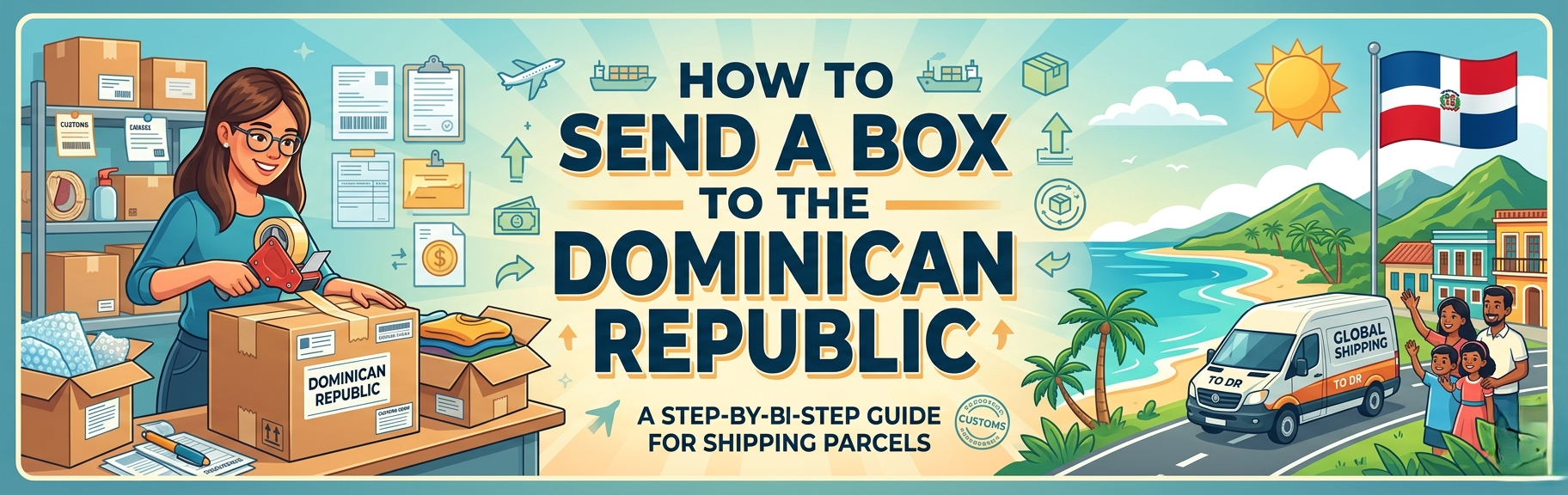
How to Send a Box to the Dominican Republic
Sending a package overseas carries a weight that goes far beyond cardboard and tape. For the thousands of Dominican families separated by geography, a box shipped from the United States is a lifeline; it carries medicine, children's clothes, household goods, and the unmistakable warmth of someone who was thinking of you. If you have never done it before, the process can seem intimidating. Customs forms, weight restrictions, prohibited items, and delivery timelines all demand your attention. But once you understand how the system works, shipping to the Dominican Republic becomes something you can do with real confidence.
This guide walks you through every stage of the journey, from choosing what to pack to understanding what happens when your box arrives on the island. Whether you are sending a single parcel or a large barrel full of goods, the fundamentals remain the same, and knowing them will save you time, money, and a great deal of frustration.
Start with What You Are Sending
Before you even think about packaging, take a careful inventory of what you plan to include. The Dominican Republic's customs authority, the Dirección General de Aduanas, maintains a clear list of restricted and prohibited items, and violations can result in packages being held, taxed heavily, or destroyed. Understanding this list is the single most important step you can take before shipping.
Used clothing is one of the most commonly shipped categories, and it is generally permitted without issue. Electronics, kitchen appliances, toys, personal hygiene products, non-perishable foods, and over-the-counter medications are all commonly included in shipments without trouble. What you want to avoid is anything flammable, aerosols, lithium batteries shipped in large quantities, and any items that could be interpreted as commercial goods without the proper documentation.
"A box sent from the United States is more than a shipment it is a message that says someone on the other side of the water has not forgotten you."
Fresh produce, raw meat, and dairy products are prohibited for obvious biosecurity reasons. Even canned or dried foods should be reviewed carefully, as some items carry import restrictions depending on their origin. When in doubt, contact your shipping company before you pack. The cost of a five-minute phone call is far less than the cost of a seized shipment.
Packing Your Box the Right Way
Good packing is about more than protecting your items during transit, but it is also about being honest and transparent with customs officials. Each item in your box will be subject to review, and a well-organized, clearly packed shipment moves through the process much faster than a chaotic one.
Start with a sturdy double-walled cardboard box. Boxes that have been used previously are acceptable, as long as they are structurally sound. Avoid using boxes that previously held alcohol, firearms, or controlled substances, as these can attract unnecessary attention. Fill any space with packing paper, bubble wrap, or foam peanuts to prevent items from shifting during transit. Heavy items belong at the bottom; fragile items should be individually wrapped and positioned near the center of the box where they are most protected.
Seal every seam — top, bottom, and all four corners with strong packing tape. A single strip down the middle of a box is not sufficient. Think about how many times that box will be lifted, stacked, sorted, and moved before it reaches its destination, and pack accordingly.
Understanding Customs and Duties
When your box arrives in the Dominican Republic, it will pass through customs inspection. This is standard procedure for all international shipments, and the experience is straightforward for most personal packages. The key is to complete your customs declaration form accurately and completely. Misrepresenting the contents or the value of your shipment is not worth the risk — customs officials are experienced at identifying discrepancies, and the penalties can be severe.
For personal-use shipments, the Dominican Republic allows a certain value of goods to enter duty-free each year. Anything above that threshold may be subject to an import tax, which is calculated as a percentage of the declared value. Commercial shipments — goods intended for resale — are subject to entirely different regulations and require proper import permits. If you are unsure whether your shipment qualifies as personal or commercial, your shipping company should be able to advise you.
One practical tip: include a handwritten note or a simple typed list inside the box that describes the contents. This is not legally required for personal shipments, but it can help customs agents process your package more quickly, especially if the inspection involves opening the box.
Choosing the Right Shipping Method
For those looking to buy and ship from US to Dominican Republic, there are two broad categories to understand: air freight and sea freight. Air freight is significantly faster — transit times typically range from a few days to about a week, but it is also more expensive, particularly for heavy or bulky shipments. Sea freight takes longer, often two to four weeks, depending on the port of origin and destination, but the cost per pound is much lower, making it the preferred option for large boxes or barrels.
Most people who send boxes to the Dominican Republic on a regular basis use a specialized Caribbean freight forwarder rather than a general courier. These companies understand the specific requirements of Dominican customs, have established relationships with local agents, and can often provide door-to-door service that takes the complexity entirely out of your hands. They also tend to offer more competitive rates than major international couriers for this specific route.
When you send a parcel to the Dominican Republic, both weight and dimensions matter. Most freight companies charge by the greater of actual weight or volumetric weight, so a large, lightly packed box can end up costing more than a smaller, denser one. Ask your carrier about their pricing structure before you finalize your packaging, and consolidate your shipment as efficiently as possible.
Tracking, Delivery, and What to Expect
Once your box has been picked up and is in transit, tracking becomes your best friend. Reputable freight companies will provide a tracking number that allows you to monitor your shipment at every stage of its journey. This is especially important for shipping cargo to Dominican Republic, where the process involves multiple handling points — your local freight office, the US port of departure, customs clearance, and final local delivery on the Dominican side.
Delivery in the Dominican Republic can take a variety of forms depending on the company you use and the destination address. Some carriers deliver directly to the recipient's home; others require the recipient to pick up the package from a local office or warehouse. Make sure both you and your recipient understand the delivery arrangement before you ship, so there are no surprises when the box arrives.
Delays, while not the norm, do happen. Major holidays in the Dominican Republic — particularly during the Christmas season, Semana Santa, and Carnival — can slow customs processing significantly. If your package is time-sensitive, plan accordingly and ship well in advance of any deadlines.
Finally, keep copies of all your documentation: your customs declaration, proof of payment, and your tracking number. If a problem arises during a delayed shipment, a customs hold, or a damaged item, these documents are your first line of defense. A good shipping company will assist you in resolving any issues, but having your paperwork in order makes the process considerably smoother.
Also Read: Prohibited Items When Shipping to the Dominican Republic
━━━━━━━━━━━━━━━━━━━━━━━━━━━━━━━━━━━
READY TO SHIP?
Ship with Zion | The Caribbean's Most Trusted Name
Thousands of families across the US trust Zion Shipping to get their boxes safely and affordably to the Dominican Republic on time, every time. We offer transparent pricing, real-time tracking, dedicated customer support, and 15+ years of experience navigating Dominican customs. When you choose Zion, you're not just choosing a carrier, you're choosing peace of mind.
📦 Get a Free Quote Today: www.zionshipping.com 📦
15+ Years of Service • 50,000+ Boxes Delivered • 99% On-Time Delivery • $0 Hidden Fees
━━━━━━━━━━━━━━━━━━━━━━━━━━━━━━━━━━━
Frequently Asked Questions
Q1: How long does it take for a box to arrive in the Dominican Republic from the US?
Transit times depend on the shipping method you choose. Air freight typically takes 3 to 7 business days from the time your package is picked up. Sea freight is the most popular option for large boxes and barrels, and generally takes 2 to 4 weeks. Customs processing time is included in these estimates, though delays can occur during peak holiday periods such as Christmas and Semana Santa.
Q2: What items are prohibited from being shipped to the Dominican Republic?
The Dominican Republic prohibits the import of fresh produce, raw meats, dairy products, firearms, flammable materials, aerosols, and counterfeit goods. Certain medications require documentation, and large quantities of electronics may be subject to commercial import regulations. Always verify with your shipping company if you are unsure about a specific item before packing your box.
Q3: Do I have to pay customs duties on the items I send?
Personal-use shipments are generally allowed a duty-free threshold. Items above that declared value may be subject to import taxes assessed by Dominican customs. Commercial goods intended for resale are subject to a separate, more rigorous import process. Zion Shipping's team can help you understand what to expect based on the contents and declared value of your shipment.
Q4: Can I track my box after it has been shipped?
Yes. Zion Shipping provides tracking information for all shipments. Once your box is in transit, you will receive a tracking number that allows you to monitor its progress at every major checkpoint, from the US origin point through Dominican customs and on to final delivery. You can track online or contact our customer service team at any time for a status update.
Q5: What is the maximum weight or size for a box I can ship to the Dominican Republic?
There is no universal maximum, but individual boxes are typically limited to 70 lbs (about 32 kg) for practical handling purposes. Larger or heavier shipments can be accommodated through consolidated freight arrangements. Zion Shipping will assess your specific needs and recommend the most cost-effective solution, whether that means splitting your items into multiple boxes or using a different freight category.