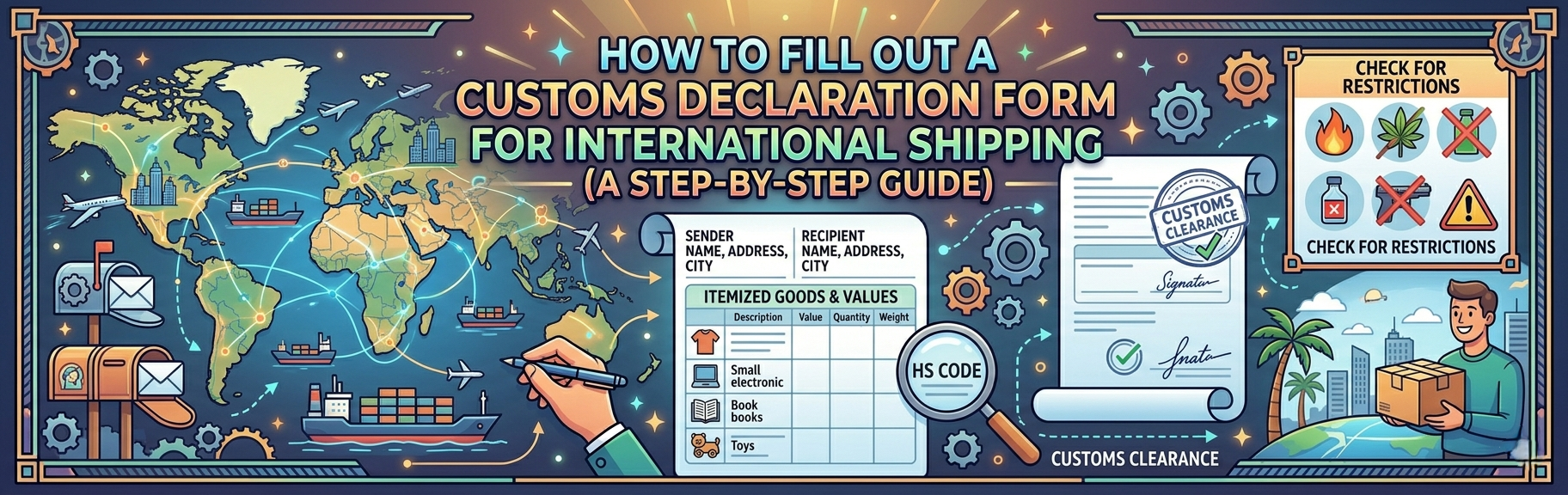
How to Fill Out a Customs Declaration Form for International Shipping
Sending a package overseas is not just about printing a label and handing it over. For most merchandise, a customs form is required, and the form must be completed correctly to avoid delays, inspections, or shipment returns. The customs declaration helps authorities understand what is inside the package, its value, its purpose, and whether any taxes or restrictions apply.
If you have ever wondered how to fill out a customs form correctly without making expensive mistakes, the process becomes much easier once you understand the purpose behind each section. A properly completed customs declaration helps packages move through international borders more smoothly and reduces the chance of customs-related problems.
This guide explains each step involved in completing a customs declaration form for international shipping, including item descriptions, shipment values, package weight, HS codes, and common mistakes to avoid.
Understanding Why Customs Forms Matter
Customs authorities use declaration forms to inspect and process incoming international shipments. The information provided on the form helps determine whether taxes, duties, or import restrictions apply to the package.
Without proper customs documentation, shipments may be delayed, returned, or even rejected at the destination country. Customs officials rely heavily on the accuracy of the information provided by the sender.
The customs declaration form in the international shipping process is not just administrative paperwork. It is one of the most important parts of successful international delivery because it directly affects customs clearance and shipment approval.
Step 1: Confirm the Shipment Type
The first step is identifying the type of shipment you are sending. Personal gifts, commercial merchandise, returned goods, samples, and documents may all require slightly different customs treatment depending on the destination country.
Commercial products generally require more detailed declarations because customs authorities may apply duties, taxes, or import restrictions based on product category and declared value.
Before filling out the form, make sure you understand whether the shipment is personal or commercial. This helps ensure the customs declaration is completed accurately from the beginning.
Step 2: Enter Sender and Recipient Information
Accurate sender and recipient information is extremely important for international delivery. Full names, street addresses, postal codes, phone numbers, and email addresses should all be entered carefully.
Using incomplete or incorrect address details can create customs delays or failed deliveries even if the shipment clears customs successfully.
When completing a customs declaration form USA shipment, avoid abbreviations whenever possible. Full contact information helps customs authorities and delivery providers communicate effectively if additional verification is required.
Step 3: Describe the Package Contents Clearly
One of the biggest mistakes people make is writing vague item descriptions. Customs authorities need clear and specific details about every item inside the shipment.
Descriptions such as “accessories,” “parts,” or “gift items” are often too broad. Instead, explain exactly what the item is, what material it is made from, and its intended use.
For example, “cotton T-shirt,” “wireless headphones,” or “stainless steel water bottle” are much better descriptions than general labels like “clothing” or “electronics.”
Accurate item descriptions help customs officers classify the shipment correctly and reduce the risk of inspections or delays.
Step 4: Declare the Correct Item Value
Every item included in the shipment should have an accurate declared value. Customs authorities use declared values to determine taxes, import duties, and customs clearance requirements.
Some senders mistakenly undervalue products in an attempt to reduce customs charges. This can create serious customs problems if authorities believe the shipment value is inaccurate.
The safest approach is always honesty and consistency. The declared value should match the actual worth of the product being shipped.
Anyone learning how to declare package for customs should understand that accurate values are essential for smooth international shipping and legal compliance.
Step 5: Record the Package Weight
The customs form also requires the total shipment weight, including packaging materials. Weight affects shipping cost calculations and may influence customs processing requirements.
Packages should always be weighed after final packaging is completed. Estimating weight incorrectly can create shipping adjustments or additional charges later.
For larger shipments, using a reliable shipping scale helps improve accuracy and prevents unexpected billing corrections during transit.
Step 6: Add Product Classification or HS Codes
Many international shipments require Harmonized System (HS) codes to classify products correctly for customs processing. HS codes help customs authorities identify the product category and determine applicable duties or restrictions.
While some shipping systems automatically generate codes based on product descriptions, it is still important to provide detailed item information to ensure proper classification.
This part of the international shipping customs paperwork process may seem technical, but it helps customs systems process packages more efficiently and reduces the chance of misclassification.
Step 7: Choose the Correct Customs Form Method
Most shipping carriers and postal services now require electronic customs forms instead of handwritten paperwork. Online customs systems are generally faster, more accurate, and easier to process internationally.
Shipping platforms often guide users step-by-step through the customs declaration process and automatically generate shipping labels and customs documents together.
Electronic forms also reduce handwriting errors and help ensure customs data is transmitted properly before the shipment arrives at the destination country.
Step 8: Review Restrictions Before Shipping
Every country has different import restrictions. Certain products may be prohibited, restricted, or require additional documentation before entering the destination country.
Common restricted items include alcohol, tobacco, batteries, food products, medicines, cosmetics, and hazardous materials. Some countries also regulate plant products, animal-based items, and electronic devices.
Before finalizing the shipment, verify that all package contents comply with the destination country’s regulations. Checking restrictions in advance can prevent customs seizures or shipment rejection later.
Common Customs Form Mistakes to Avoid
One major mistake is using vague descriptions that fail to explain what the item actually is. Another common problem is entering inaccurate shipment values or forgetting to include all package contents on the declaration.
Missing recipient details, incorrect postal codes, and incomplete invoices can also slow customs processing significantly.
Some people also forget that customs officials compare package contents with the declaration form. If the physical shipment does not match the paperwork, customs authorities may inspect or hold the package.
Careful review before shipment dispatch is one of the simplest ways to avoid international shipping problems.
Why Accurate Customs Paperwork Matters
Accurate customs paperwork improves delivery speed, customs clearance efficiency, and shipment reliability. It also reduces the likelihood of penalties, delays, rejected shipments, or unexpected import fees.
International shipping systems depend heavily on customs documentation because authorities use this information to monitor imports, assess duties, and verify product compliance.
Completing customs declarations correctly is not just about following regulations. It also creates a better delivery experience for both sender and recipient.
Professional shipping providers can often help review customs paperwork before dispatch, which is especially helpful for business shipments, valuable items, or first-time international senders.
Final Thoughts
Filling out a customs declaration form correctly is one of the most important steps in international shipping. Clear item descriptions, accurate values, complete addresses, proper package weight, and correct product classifications all help shipments move through customs more efficiently.
Whether you are shipping gifts, commercial products, personal belongings, or business inventory, Zion Shipping can help simplify the international shipping process with reliable guidance and customs support. Contact Zion Shipping today for dependable international delivery solutions and expert assistance with customs paperwork preparation.
Also Read: How to Ship Large Furniture & Oversized Items Internationally from the USA
FAQs
1. Why is a customs declaration form required for international shipping?
Customs declaration forms help authorities identify package contents, determine import taxes, and verify whether products comply with destination-country regulations.
2. What happens if I enter the wrong value on a customs form?
Incorrect values can lead to customs delays, additional inspections, penalties, or reassessment of import duties and taxes.
3. Can I write general descriptions like “gift” or “electronics”?
No, customs authorities prefer detailed item descriptions such as “wireless headphones” or “cotton T-shirt” instead of broad categories.
4. Do all international shipments require customs paperwork?
Most merchandise shipments require customs documentation, although some document-only shipments may have different requirements depending on the carrier and destination.
5. How can I avoid customs delays when shipping internationally?
Use accurate paperwork, provide clear item descriptions, declare honest shipment values, verify recipient information, and check destination-country import restrictions before shipping.