
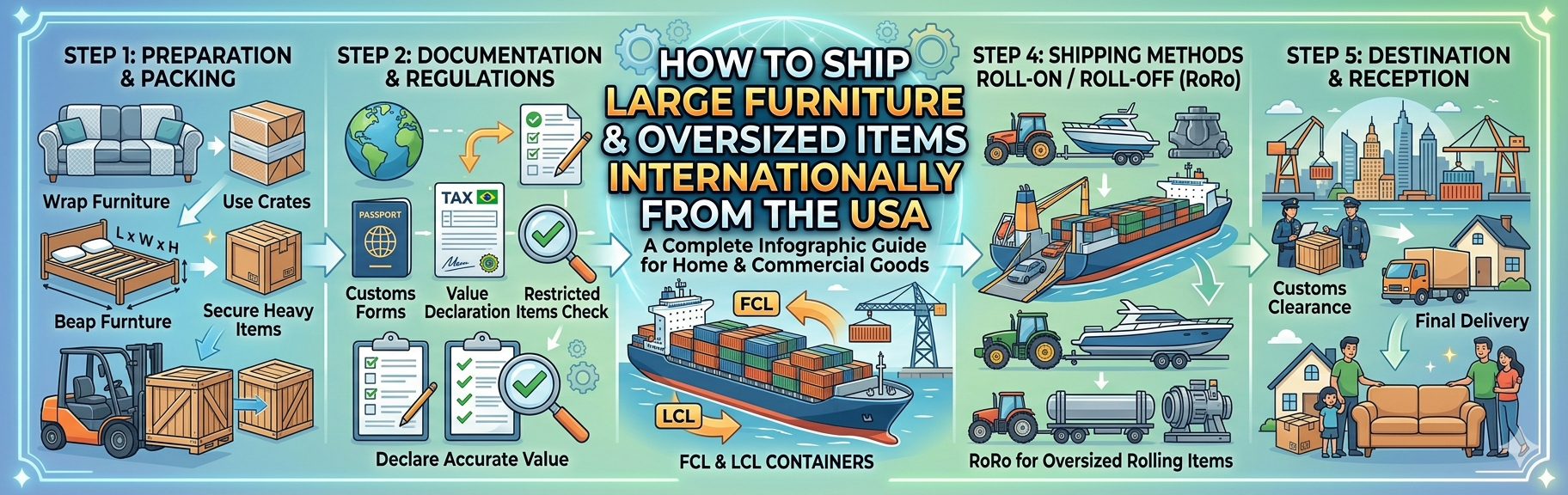
How to Ship Large Furniture & Oversized Items Internationally from the USA
Shipping large furniture and oversized items internationally can feel overwhelming at first. Unlike standard parcels, bulky shipments require special handling, stronger packaging, freight coordination, customs documentation, and careful planning to avoid expensive delays or damage during transit. Whether you are relocating abroad, furnishing a new home, sending commercial furniture, or transporting oversized personal belongings, understanding the international shipping process can save both time and money.
Large-item shipping is different from regular parcel delivery because freight carriers calculate costs based on dimensions, weight, destination, transport method, and handling requirements. A sofa, dining table, office desk, antique cabinet, or oversized décor piece may require palletization, crate protection, or even freight container space, depending on the shipment size.
This guide explains how oversized international shipping works, what affects the cost, how customs clearance is handled, and what steps help ensure a smooth delivery process from the USA to destinations worldwide.
Understanding Oversized International Shipping
International shipping for bulky products is usually handled through freight services instead of standard courier networks. Freight carriers are designed to transport large, heavy, or unusually shaped cargo that exceeds regular parcel size limitations.
The shipping process often begins with pickup scheduling, packaging inspection, dimensional measurements, and freight classification. Depending on the size and urgency, shipments may travel by air freight or ocean freight. Air shipping is faster but more expensive, while sea freight is more economical for large-volume shipments.
Many customers looking to ship furniture internationally are surprised by how much preparation is involved before the item even leaves the warehouse. Accurate dimensions, secure packaging, and customs-ready paperwork are all critical parts of successful delivery.
Choosing Between Air Freight and Ocean Freight
One of the first decisions involves selecting the right transport method. Air freight is typically used for urgent shipments or high-value items that need faster delivery. However, because airlines charge heavily for dimensional weight, large furniture pieces can become expensive to transport by air.
Ocean freight is usually the preferred option for large household items and commercial furniture because it offers better value for oversized cargo. Containers allow bulky items to travel more securely and cost-effectively over long distances.
The choice often depends on delivery timeline, shipment volume, and budget. Smaller oversized shipments may move through shared freight space, while full-home relocations may require dedicated container capacity.
Why Accurate Measurements Matter
Measurements play a major role in international freight pricing. Freight companies calculate charges using dimensional weight, total cubic volume, and actual shipment weight. Incorrect dimensions can lead to pricing adjustments, delivery delays, or additional handling fees after pickup.
It is important to measure the full packaged dimensions rather than the bare furniture dimensions. Protective wrapping, wooden crates, pallets, and additional cushioning all increase shipment size.
For anyone arranging oversized item shipping USA, precision matters because even small measurement errors can significantly affect international freight costs.
Packaging Requirements for Large Furniture
Packaging is one of the most important parts of oversized international shipping. Furniture often passes through multiple transfer points, loading docks, warehouses, customs inspections, and vehicles before reaching the final destination.
Fragile surfaces, glass components, wooden edges, and upholstered materials require strong protection during transit. Most freight providers recommend using heavy-duty cardboard, foam protection, shrink wrap, reinforced corners, and wooden crating for valuable items.
Disassembling large furniture pieces can also reduce shipping size and lower transportation costs. Removing table legs, shelving sections, or detachable parts helps improve handling efficiency and minimizes damage risk.
Large and delicate shipments should never rely on lightweight packaging materials alone. International freight environments are far more demanding than domestic parcel delivery systems.
Customs Clearance for Large Shipments
International furniture shipments must comply with the destination country's customs regulations. Customs authorities typically review invoices, item descriptions, shipment values, and import classifications before releasing oversized freight.
Used household furniture may be treated differently from new commercial goods depending on the destination country. Some countries require proof of ownership, relocation documents, or fumigation certificates for wooden furniture and crates.
Accurate customs declarations are essential because freight delays often happen when shipment descriptions are incomplete or incorrect. Generic descriptions like “household items” may trigger additional customs inspections.
When dealing with international freight shipping of large items, paperwork accuracy is just as important as physical packaging. Customs issues can delay freight for days or even weeks if documentation does not match shipment contents properly.
Understanding Freight Costs
Oversized international shipping costs depend on several factors beyond weight alone. Freight pricing usually includes transportation method, dimensional size, destination country, customs processing, pickup location, packaging requirements, fuel surcharges, and delivery accessibility.
Residential deliveries may cost more than commercial deliveries because freight trucks require additional coordination for home access. Remote destinations can also increase final-mile delivery charges.
Another important factor is freight classification. Delicate, high-value, or irregularly shaped furniture may require specialized handling, which increases shipping rates.
People searching for ways to ship large boxes overseas often underestimate how much dimensions affect pricing. In freight shipping, volume frequently matters more than actual weight.
Common Challenges with Oversized Shipping
Large-item shipping comes with challenges that smaller parcels rarely face. Limited elevator access, narrow staircases, apartment delivery restrictions, customs inspections, and unloading coordination can all affect final delivery timelines.
Weather conditions may also impact ocean freight schedules, especially during peak shipping seasons. International freight congestion at ports can create additional delays for oversized cargo.
Damage prevention is another major concern. Bulky items are more exposed to movement during loading and unloading, which is why strong packaging and freight-safe preparation are essential.
Communication also becomes more important with freight shipping. Customers should stay updated on transit status, customs processing, and delivery scheduling to avoid missed appointments or storage charges.
How to Reduce Oversized Shipping Costs
Reducing freight expenses begins with smart planning. Disassembling furniture where possible can reduce dimensional size and lower transportation costs. Using the correct packaging size also prevents unnecessary dimensional-weight charges.
Consolidating multiple items into a single freight shipment may improve cost efficiency compared to sending separate packages individually. Flexible delivery timelines can also reduce costs because economy freight services are often more affordable than express options.
Comparing freight providers carefully is another important step. Some carriers specialize in household relocation shipments, while others focus more on commercial cargo or container freight services.
Anyone researching how to ship bulky items internationally should focus on balancing cost, transit time, packaging quality, and customs support instead of choosing based only on the cheapest quote.
Why Professional Freight Support Matters
Oversized shipping requires more coordination than standard international parcel delivery. Freight documentation, customs procedures, scheduling, packaging standards, and carrier requirements can become complicated without professional guidance.
A reliable shipping company helps simplify the process by providing freight estimates, packaging recommendations, customs assistance, and shipment tracking support. Experienced logistics providers also understand country-specific import rules, which reduces the risk of customs delays.
Professional freight support becomes especially valuable for fragile furniture, luxury items, antiques, office relocations, and high-value commercial shipments. A knowledgeable logistics team can help prevent costly mistakes before the shipment even leaves the USA.
Final Thoughts
Shipping large furniture and oversized items internationally requires careful preparation, proper packaging, accurate documentation, and the right freight partner. Understanding how freight pricing works, preparing customs paperwork correctly, and choosing the best transport method can make the process much smoother and more cost-effective.
Whether you are moving household furniture, commercial inventory, office equipment, or oversized personal belongings, Zion Shipping can help simplify the process with reliable freight support and international shipping expertise. Contact Zion Shipping today to move your oversized shipment with confidence and experience professional international freight solutions designed for large-item delivery.
Also Read: How to Ship Gifts Internationally Without Paying High Customs Duties
FAQs
1. What is the best way to ship large furniture internationally?
The best method depends on the size, urgency, and destination of the shipment. Ocean freight is usually more economical for large furniture, while air freight is faster for urgent deliveries.
2. Why is oversized international shipping expensive?
Costs are based on dimensional size, freight handling, shipping distance, customs processing, and transportation method rather than weight alone.
3. Do oversized shipments require customs paperwork?
Yes, international freight shipments require invoices, customs declarations, and accurate item descriptions for clearance in the destination country.
4. Can furniture be disassembled before shipping?
Yes, disassembling furniture can reduce shipment size, lower shipping costs, and improve handling safety during international transit.
5. How can I protect large furniture during shipping?
Using heavy-duty packaging materials, foam protection, reinforced corners, shrink