
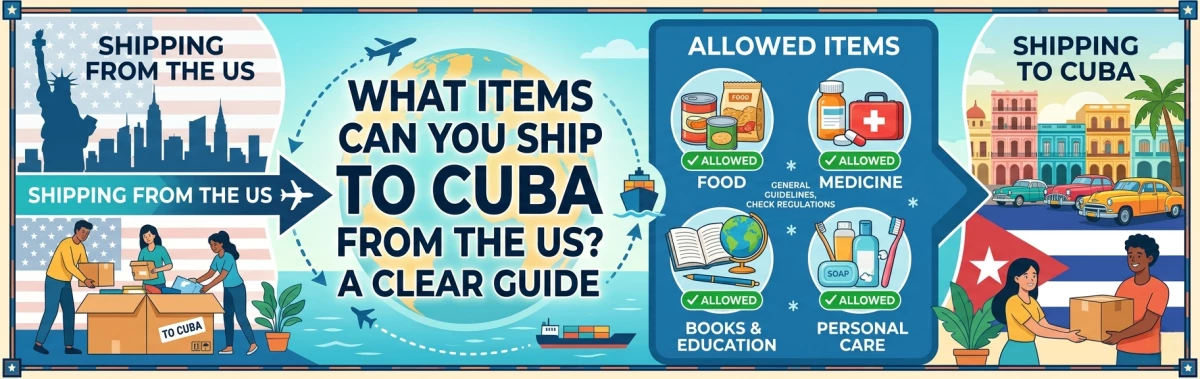
What Items Can You Ship to Cuba from the US? A Clear Guide
Shipping items from the United States to Cuba can feel complicated at first, especially when you are trying to understand what is allowed, what needs documentation, and how to make sure a package arrives without delays. The good news is that many everyday items can be shipped successfully when they are packed properly, documented correctly, and sent through the right service. Whether you are sending personal care products, clothing, household goods, gifts, or essential supplies, knowing the rules in advance helps you avoid costly mistakes and unnecessary holdups.
This guide explains what items can usually be shipped, what items often require special care, and how to make smarter choices when planning a shipment to Cuba. It also covers the difference between small parcel shipments and larger cargo solutions, so you can decide which method makes the most sense for your needs.
Understanding the Basics of Shipping to Cuba
Before sending anything, it is important to remember that shipping rules can change depending on the type of item, the value of the shipment, and the purpose of the goods. Some products are easier to send because they are personal items, while others may need additional paperwork or may not be accepted at all. Customs authorities review shipments carefully, so clear descriptions, proper packaging, and accurate declarations matter.
Many people look for shipping to Cuba from Miami because Miami has long been one of the most active shipping gateways for Cuba-bound cargo. Its location, logistics network, and experience with Caribbean shipping make it a practical choice for individuals and businesses alike. Still, location alone is not enough. The shipping method, the contents of the box, and the documentation all play a major role in whether the shipment moves smoothly.
Common Items That Can Usually Be Shipped
A wide range of everyday goods can often be shipped to Cuba when they are not restricted and when they are properly declared. Clothing is one of the most common categories. New clothes, gently used clothes, shoes, and seasonal apparel are usually easy to ship, especially when they are packed neatly and labeled clearly. Families often send clothes for children, school wear, and basic household garments to relatives in Cuba.
Household essentials are another popular category. Bedding, towels, kitchen accessories, small home goods, and basic personal items are often included in shipments. These products are practical, useful, and generally easier to transport than fragile or specialized items. When sending household products, it helps to choose items that are lightweight, durable, and easy to pack.
Personal care products may also be allowed, depending on the item and quantity. Common examples include soap, shampoo, toothpaste, lotion, and other everyday hygiene products. These are often shipped as gifts or support items for family members. It is best to keep quantities reasonable and avoid anything that looks commercial unless you are shipping under the correct category and paperwork.
Non-perishable food items are another category people frequently ask about. Canned goods, sealed dry foods, pasta, rice, and packaged snacks may be acceptable if they meet shipping and customs requirements. The key is to choose items that are shelf-stable, properly sealed, and clearly described on the manifest. Fresh food, perishable goods, and temperature-sensitive products are much more difficult to send and are often not suitable for standard shipping.
Medicines and health related items can be more sensitive. Some over-the-counter items may be allowed, while prescription medicines and regulated health products may require additional attention. Because health shipments can involve stricter rules, it is always wise to confirm the current requirements before sending anything in this category.
Electronics are another area where caution is important. Small consumer electronics, phone accessories, chargers, and simple devices may be possible to ship, but the item value, brand, and purpose should be clearly listed. Larger electronics may require more careful handling and may be better suited to a freight solution.
Items That Need Extra Care
Some products are not automatically prohibited, but they do need more planning. Fragile items such as glassware, framed pictures, decorative pieces, or appliances should be packed with strong protection so they survive the journey. If an item has moving parts or can be damaged by pressure, it should be wrapped securely and boxed with cushioning material.
Batteries and devices containing batteries can also require special handling. Power banks, spare batteries, and some electronic devices may have transport limitations because of safety concerns. This does not always mean they cannot be shipped, but it does mean you should check the service rules before sending them.
Gift shipments are common, especially for birthdays, holidays, and family support. When sending gifts, try to keep the contents simple and clearly identifiable. A well-described package is more likely to pass smoothly through processing than one with vague item descriptions.
Many customers also want to buy online and send to Cuba, which can be convenient when available products are shipped through a trusted logistics partner. This approach saves time, reduces the chance of errors, and helps make sure the items reach the destination with the right packaging and paperwork.
What Usually Causes Delays
Even when the items are allowed, shipments can still be delayed if the description is unclear, the package is poorly packed, or the declared value looks inconsistent. One of the most common mistakes is listing the contents too broadly. Instead of writing something vague like “miscellaneous items,” it is better to identify what is inside the box as accurately as possible.
Another common issue is overpacking or underpacking. Boxes that are too full can burst, while boxes that are loosely packed can shift during transit. The best approach is to use a sturdy carton, fill empty spaces with protective material, and seal the box properly.
Incorrect documentation can also slow things down. Customs forms should match the contents exactly. If a package contains mixed items, each category should be listed clearly. The goal is to make the review process as easy as possible for the shipping provider and the customs office.
Choosing the Right Shipping Method
Different shipments call for different methods. A small personal box may be sent through standard parcel service, while larger household quantities or commercial shipments may need cargo handling. This is where freight shipping to Cuba becomes especially useful. Freight solutions are often better for bulky, heavier, or higher volume shipments because they can move larger loads more efficiently than small parcel services.
Freight can be a strong option for families sending multiple boxes, businesses shipping inventory, or customers sending large quantities of goods. It may also provide better value when the shipment weight increases. The right method depends on how much you are sending, how quickly it needs to arrive, and what kind of goods are inside.
For customers who want a reliable process, working with the best agency to send packages to Cuba can make a major difference. An experienced agency can help explain the rules, suggest the right shipping option, and reduce the chance of errors. That support is especially valuable if this is your first shipment or if you are sending something more complex than a simple box of clothing.
Tips for Packing and Preparing Your Shipment
Good packing helps protect the contents and also shows that the sender has taken care with the shipment. Start with a strong box that matches the size of the items. Avoid using a box that is too large, because the contents can move around and get damaged. Wrap fragile goods individually and make sure heavier items are placed at the bottom.
Label everything clearly. If the shipping provider asks for an item list, make it accurate and easy to read. Keep receipts or proof of value for higher-value shipments, especially when you are sending electronics or multiple new items.
It is also smart to separate categories inside the box when needed. For example, clothes can be folded and grouped together, while toiletries can be sealed in a separate pouch to prevent spills. Small extra steps like these can save you from damaged items and delays later.
Why Using a Trusted Shipping Partner Matters
Shipping to Cuba is much easier when you have a partner who understands the route, the paperwork, and the most common customs issues. A good shipping partner helps you avoid guesswork and gives you a clearer idea of what can be sent and how it should be prepared. That matters whether you are sending family gifts, personal items, or larger cargo shipments.
At Zion Shipping, the focus is on making the process affordable, clear, and dependable. If you are looking for a practical way to Ship Items to Cuba without unnecessary stress, Zion Shipping offers a helpful solution for families, individuals, and businesses that want a smoother experience. With the right support, you can save time, reduce errors, and send your package with more confidence.
Final Thoughts
Shipping items to Cuba from the US does not have to be overwhelming. Once you understand what is typically allowed, how to pack it properly, and which method fits your shipment, the process becomes much easier. Clothes, household essentials, personal care products, non-perishable food, gifts, and some electronics are often among the most commonly shipped items, while fragile, regulated, or restricted goods need more caution. The key is to stay organized, describe everything clearly, and choose a service that understands the route.
When your goal is to send items safely and affordably, the right shipping partner can make all the difference. Zion Shipping is a trusted and affordable option for those who want a smoother experience shipping to Cuba, whether the shipment is personal, family-related, or larger in scale.
Also Read: Best way to Ship Care Packages to Cuba?
FAQs
1. What items are most commonly shipped to Cuba from the US?
Clothing, household essentials, personal care products, gifts, and some non-perishable foods are among the most common items people send.
2. Can I send electronics to Cuba?
Some small electronics and accessories may be allowed, but they should be checked carefully before shipping because transport rules and customs requirements can vary.
3. Is it better to send a small parcel or use freight?
That depends on the size and weight of the shipment. Smaller personal boxes may work well as parcels, while larger or heavier shipments are often better suited to freight.
4. How can I avoid delays when shipping to Cuba?
Use accurate item descriptions, pack the box securely, avoid restricted goods, and make sure all paperwork matches the contents of the shipment.
5. Why should I choose Zion Shipping for Cuba shipments?
Zion Shipping offers an affordable and dependable way to send packages, helping you ship items with more clarity, better support, and less hassle.