5 Common Mistakes to Avoid When Shipping to Haiti
Shipping packages internationally can feel simple at first, but once you begin planning a delivery to Haiti, the details matter a lot more than many people expect. Delays, extra charges, customs issues, and damaged items often happen because of a few avoidable mistakes. Whether you are sending personal belongings, business inventory, gifts, or time-sensitive supplies, careful planning can save both money and stress.
Haiti has its own shipping rules, port processes, and delivery realities, so what works for domestic shipping does not always work for international freight. A package that looks properly packed, labeled, and prepared may still get held up if the paperwork is incomplete or if the service chosen is not suitable for the shipment type. The good news is that most problems can be avoided with the right preparation.
In this guide, we will look at five common mistakes that people make when shipping to Haiti and explain how to avoid them. If you are new to international delivery or simply want a smoother experience, these tips will help you ship more confidently and efficiently.
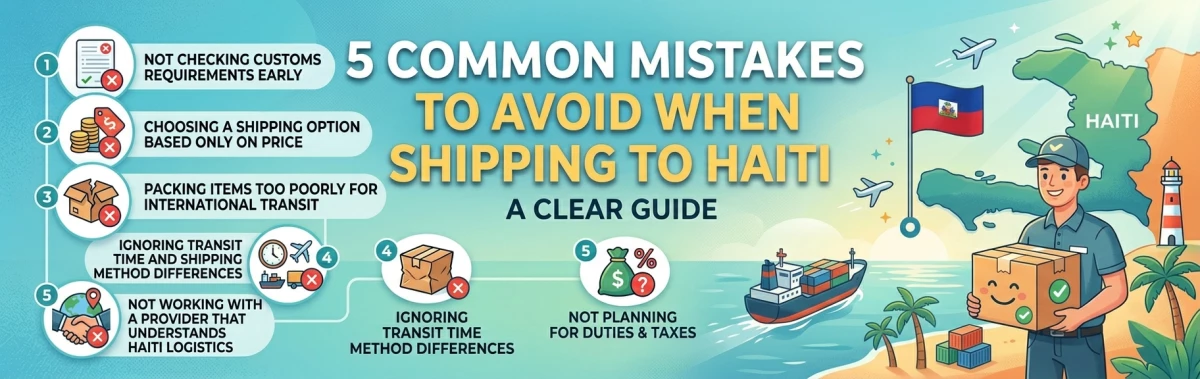
Mistake 1: Not Checking Customs Requirements Early
One of the biggest mistakes in haiti shipping is waiting until the package is already packed before checking customs requirements. Many shippers assume that if an item is allowed in one country, it will automatically clear in another. That is rarely true. Every destination has its own import rules, restricted items, document expectations, and duty calculations.
When customs paperwork is missing or inaccurate, your shipment may be delayed, returned, inspected for longer than expected, or even rejected. Some items may also require special declarations, invoices, or supporting documents. This is especially important for business shipments, electronics, medicines, food items, and high-value goods.
The best way to avoid this problem is to verify the destination rules before preparing the parcel. Make sure the invoice is accurate, the contents are clearly described, and the recipient details are complete. If you are unsure about an item, it is better to ask before shipping rather than hoping customs will sort it out later.
Mistake 2: Choosing a Shipping Option Based Only on Price
It is natural to look for the lowest rate, especially when sending a large or heavy shipment. But selecting a service based only on cost can create bigger problems later. A cheaper rate may come with slower transit time, limited tracking, weaker handling, or less support during customs clearance.
Many people searching for shipping to haiti near me are really looking for convenience and reliability, not just the nearest office. A nearby location does not automatically mean better service. What matters more is whether the provider understands Haiti routes, offers solid customer support, and can guide you through packaging, documentation, and delivery timelines.
Price should always be considered, but it should be balanced with transit speed, shipment type, tracking quality, and service reliability. For urgent parcels, perishables, or fragile items, a low-cost option that cannot protect the shipment is often more expensive in the end. A delayed or damaged package can cost much more than the savings from a discounted rate.
Mistake 3: Packing Items Too Poorly for International Transit
International shipments usually travel through multiple handling points, and that means parcels are exposed to far more movement than a local delivery. Weak boxes, loose packing material, and poor cushioning are common reasons why items arrive broken or partially damaged.
This mistake is especially costly when shipping glassware, electronics, cosmetics, bottles, or anything fragile. A package that survives one short truck ride may not survive airport handling, transfer points, or final-mile delivery. Shippers often assume a neat outer box is enough, but internal protection is just as important.
Every item should be wrapped securely, separated if necessary, and packed so it does not move inside the carton. Heavy items should be placed at the bottom, and empty spaces should be filled carefully. The outer box should be strong enough to withstand pressure, stacking, and rough handling. Labels should also be clear and firmly attached so they do not peel off in transit.
Taking extra time with packaging can prevent disappointment, reduce claims, and help your shipment arrive in better condition.
Mistake 4: Ignoring Transit Time and Shipping Method Differences
Not every shipment needs the same route or service level. One of the most common mistakes is assuming that all international services work the same way. In reality, the best option depends on how urgent the package is, what is being sent, and how much it weighs.
For time-sensitive parcels, air cargo shipping to haiti may be the right choice because it can shorten delivery time and provide a more predictable schedule. However, air cargo is not always the best fit for every type of shipment, especially if the shipment is very large, bulky, or not urgent. Sea freight or consolidated cargo may be more cost-effective in those cases.
The mistake is not in choosing a method, but in choosing one without thinking through the real needs of the shipment. A business sending stock for resale may prioritize cost and volume. A family sending documents or gifts may care more about speed. A shipment containing urgent supplies may need a more direct route and stronger tracking. Matching the shipping method to the purpose of the shipment is one of the smartest ways to avoid delays and unnecessary expenses.
Mistake 5: Not Working With a Provider That Understands Haiti Logistics
International delivery becomes much easier when the shipping partner understands the destination well. Haiti has unique logistics considerations, including documentation, handling procedures, and final delivery conditions. Using a provider that lacks experience in this route can lead to confusion, missed updates, and avoidable mistakes.
The best shipping company to haiti is not necessarily the one with the flashiest website or the cheapest quote. It is the one that gives clear guidance, answers questions quickly, explains the process honestly, and helps you prepare your shipment correctly from the start. Good service matters because problems are easier to prevent than to fix later.
A knowledgeable shipping provider can help you understand what to ship, how to label it, what documents are needed, and what timelines to expect. They can also guide you if your shipment requires special handling or customs support. This kind of assistance is especially valuable for first-time shippers or businesses that need consistent delivery performance.
Final Thoughts
Shipping to Haiti does not have to be complicated, but it does require attention to detail. Most problems come from a few basic mistakes: skipping customs research, choosing only by price, packing carelessly, picking the wrong shipping method, and working with a provider that does not understand the route. When you avoid these issues, your chances of a smooth delivery improve significantly.
The key is to plan ahead, prepare the right documents, pack carefully, and choose a shipping partner that can guide you through the process with confidence. A little preparation now can save a lot of time, money, and frustration later.
For a smoother, more reliable shipping experience, Zion Shipping is here to help you send your parcels with confidence, clear support, and destination knowledge that makes a real difference.
Also Read: Who Is the Best Shipping Company to Haiti?
FAQs
1. What is the most common reason shipments to Haiti get delayed?
The most common reason is incomplete or incorrect customs paperwork. Even when a package is packed well, missing details on the invoice or recipient information can hold up clearance.
2. Can I send fragile items to Haiti safely?
Yes, but fragile items need strong packaging, cushioning, and clear labeling. Double boxing and using protective material inside the parcel can reduce the risk of damage.
3. Is air shipping faster than other methods for Haiti?
In most cases, yes. Air shipping is usually faster than sea-based options, especially for urgent or smaller shipments that need quicker delivery.
4. How do I know which shipping method is right for my package?
The right method depends on the item’s size, weight, urgency, and value. Time-sensitive shipments often need faster transit, while larger non-urgent shipments may be better suited to cost-effective cargo options.
5. Why should I use a shipping company that knows Haiti routes?
A provider with Haiti experience can help you avoid documentation mistakes, choose the right service, and understand what to expect during customs and delivery, which makes the whole process easier and more reliable.