
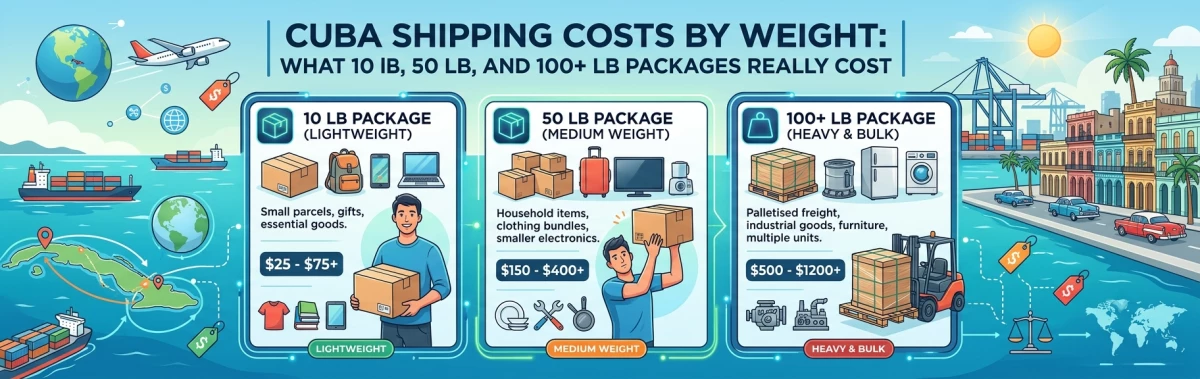
Cuba Shipping Costs by Weight: What 10 lb, 50 lb, and 100+ lb Packages Really Cost
Families across the United States send food, medicine, clothing, and household goods to loved ones in Cuba every week. The first question is almost always the same: how much will it cost? The honest answer is that it depends on weight, service type, and what is inside the box. This guide breaks down shipping to Cuba from the USA by weight tier so you can budget with confidence and avoid surprises at customs.
Note on pricing: the figures below are typical market ranges based on common consolidator and courier pricing, not a fixed quote. Rates shift with fuel costs, flight capacity, and regulations, so always confirm your exact price before you pay.
Why Weight Is the Main Cost Driver
Carriers serving the island price parcels mainly by weight, and most charge a per-pound rate that drops as the package gets heavier. Small parcels carry a higher cost per pound because handling, documentation, and customs processing cost roughly the same whether a box weighs 5 pounds or 50.
Three factors shape your final price:
- Actual weight versus dimensional weight. A large, light box can be billed by its size rather than its scale weight. Packing tightly saves money.
- Service level. Air delivery is faster and costs more. Sea delivery is slower and cheaper per pound.
- Delivery method. Some services deliver to a home address in Cuba, while others deliver to a central warehouse or pickup point.
Pricing for a 10 lb Package
A 10-pound box is the most common size for gifts, medicine, and personal items. Because minimum charges apply, expect roughly $70 to $120 for air service, which works out to about $7 to $12 per pound.
At this size, the base fee matters more than the weight. Many senders find it cheaper to add a few more pounds of useful items than to pay a high minimum for a nearly empty box. If you are sending vitamins, hygiene products, or small clothing items, filling the box toward the 15 or 20 pound mark often lowers your cost per pound noticeably.
Best for: birthday gifts, prescription supplies, phone accessories, and documents.
Pricing for a 50 lb Package
A 50-pound shipment is where the economics improve. Typical air pricing lands between $200 and $325, or roughly $4 to $6.50 per pound, depending on the provider and delivery method.
This tier suits families sending a full box of pantry staples, clothing, shoes, and toiletries. Sending one 50-pound box costs far less than five separate 10-pound boxes, so consolidating is the smartest way to save. If your budget allows, plan larger, less frequent shipments instead of many small ones.
Best for: monthly family support boxes, back-to-school supplies, and seasonal clothing.
Pricing for 100+ lb Packages
Heavy shipments carry the lowest per-pound rates. For 100 pounds and above, expect approximately $350 to $650 by air, or about $3.50 to $6.50 per pound, with better rates possible as weight climbs. Sea service can reduce this further, sometimes to the $1.50 to $3 per pound range, although transit takes longer.
At this size, freight handling, palletizing, and documentation become more important. You will usually need a detailed itemized inventory, and Cuban customs may inspect the contents more closely. Heavy cartons should be packed in sturdy, double-walled boxes and sealed well, since larger shipments pass through more hands.
Best for: relocation goods, bulk food and hygiene supplies, tools, and small business inventory.
Quick Reference: Estimated Price by Weight
Shipping Container Options for Very Large Loads
When a household or business needs to move hundreds or thousands of pounds, a shipping container to Cuba becomes the practical choice. A full container, usually 20 or 40 feet, is priced per container rather than per pound, and total costs commonly range from several thousand dollars to well above $8,000 once port fees, inland handling, and documentation are included.
Sea freight also offers a shared option, often called LCL (less than container load), where your goods share space with other senders. This suits shipments too big for parcel rates but too small to fill a whole container. Because containers involve export documentation and licensing rules, work with a provider experienced in Cuba-specific compliance.
What Affects Your Total Cost Beyond Weight
Weight is only part of the story. Before you finalize a budget, account for these additional items:
1. Insurance. Coverage typically costs 1 to 3 percent of the declared value and is worth it for electronics or other high-value goods.
2. Customs duties and fees. Cuba allows limited duty-free amounts for certain categories such as food, medicine, and hygiene items. Amounts above these allowances can be taxed or held, and the rules change, so verify current limits.
3. Delivery to the recipient. Home delivery may cost more than warehouse pickup, especially outside Havana.
4. Packaging. Quality boxes, tape, and protective materials are a small expense that prevents costly damage.
Rules Every Sender Should Know
Sending goods to Cuba is legal under U.S. regulations for many personal and humanitarian items. Still, you must follow the rules set by the Office of Foreign Assets Control (OFAC) and the Department of Commerce. In general, gift parcels of food, medicine, clothing, and personal items are permitted, while certain restricted goods are not. Cuban customs also limits or prohibits some items, including certain electronics in commercial quantities, and can change the rules with little notice.
In our experience helping senders avoid problems, the most common causes of delays are vague item descriptions, undeclared value, and prohibited items packed by mistake. Always list contents specifically, such as "6 bars of soap" rather than "toiletries," and keep a copy of your inventory.
For current, authoritative information, consult the official OFAC and Commerce Department guidance and the Cuban customs authority (Aduana General de la República de Cuba) before you ship. Regulations can shift, so what applied last year may not apply today.
How to Lower Your Cost Without Cutting Corners
You can control your bill with a few smart habits:
- Consolidate. One heavy box beats several light ones.
- Pack efficiently. Remove bulky retail packaging and use vacuum bags for clothing to reduce dimensional weight.
- Compare service levels. If the recipient is not in a rush, slower service saves real money.
- Ask about combined shipments. Some providers group multiple parcels going to the same household.
- Declare accurately. Honest, itemized declarations prevent fees and holds that cost far more than any shortcut saves.
Finding a Local Provider
Many senders start by searching for a way to send packages to Cuba near me, and a local drop off point can be convenient, especially in areas with large Cuban communities such as South Florida, New Jersey, and Texas. When comparing local providers, look for clear pricing by weight, proof of licensing, tracking, insurance options, and reviews from past customers. A provider that answers your compliance questions plainly is usually one you can trust with your shipment.
How to Choose the Right Option
If you are unsure where your shipment fits, use this simple guide:
- Under 20 lb and time-sensitive: air parcel service.
- 20 to 100 lb, regular family support: air consolidated shipping for the best balance of speed and price.
- 100+ lb, not urgent: sea freight parcels or LCL.
- Business or relocation volume: a full or shared container.
Planning ahead by even a couple of weeks gives you more options and better rates.
Final Thoughts
Understanding how weight, service level, and compliance affect price makes budgeting straightforward. A 10-pound box is convenient but costly per pound, a 50-pound box hits the sweet spot for most families, and 100+ pound loads unlock the best rates. Whatever size you choose, accurate documentation and careful packing protect both your money and your recipient's experience.
Ready to send your package? Zion Shipping makes it simple. Our team helps you choose the right service for your weight and budget, walks you through the paperwork, and keeps your shipment moving from pickup to delivery. Contact Zion Shipping today for a fast, transparent quote and send your package with confidence.
Also Read: Best Way to Send Money or Gifts to Family in Cuba (2026)
Frequently Asked Questions
1. How much does it cost to send a 50 lb package to Cuba?
A 50-pound package typically costs between $200 and $325 by air, or about $4 to $6.50 per pound. Your final price depends on the carrier, delivery method, insurance, and any handling fees, so request a written quote before shipping.
2. How long does delivery to Cuba take?
Air parcels usually arrive in about 7 to 21 days, while sea freight can take several weeks to a few months. Customs inspections, holidays, and weather can extend these timelines.
3. What items can I not send to Cuba?
Prohibited or restricted items commonly include weapons, certain electronics in commercial quantities, and goods barred under U.S. regulations. Rules are updated often, so check current OFAC, Commerce Department, and Cuban customs guidance or ask your shipping provider.
4. Is it cheaper to send one large box or several small ones?
One large box is almost always cheaper because per-pound rates drop as weight rises and you pay fewer base fees. Consolidating into a single 50- or 100-pound shipment can save significantly compared to multiple 10-pound boxes.
5. Do I need insurance when sending a package to Cuba?
Insurance is not always required, but it is strongly recommended for electronics, medicine, and high-value items. Coverage usually costs a small percentage of the declared value and can save you from a total loss if a package is damaged or goes missing.