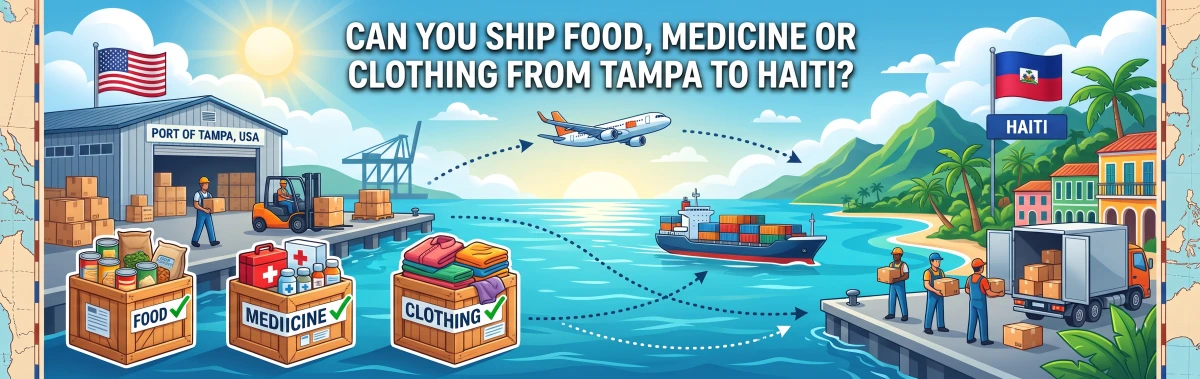
Can You Ship Food, Medicine, or Clothing from Tampa to Haiti?
Sending items to family in Haiti is one of the most meaningful things a Tampa Bay resident can do. Whether it is a barrel of rice and canned goods, a box of prescription medication for a parent, or bags of clothing for the kids, the items you send can make a real difference. But before you start packing, you need to know which items are allowed, which are restricted, and how to avoid customs delays.
The short answer is yes, you can ship food, medicine, and clothing from Tampa to Haiti. Each category has its own rules, though, and a small mistake in packing or paperwork can leave your shipment sitting at the port for weeks. This guide explains what is allowed, what to avoid, and how to get your package to its destination safely.
The Short Answer: What You Can and Cannot Send
Most everyday household items can be sent to Haiti, including shelf-stable food, clothing, shoes, toiletries, school supplies, and personal medication in limited quantities. Typically restricted or prohibited items include fresh meat, fresh produce, refrigerated dairy products, controlled substances, weapons, ammunition, and anything illegal under US or Haitian law.
Because customs regulations change, always confirm current rules with your shipping provider before you pack. Haitian authorities can inspect any shipment, and items that look commercial, such as large quantities of the same product, may be taxed or held for review.
Shipping Food from Tampa to Haiti
Food is the most common item sent in barrels and boxes from Florida, and for good reason. Many Haitian families rely on imported staples, and sending them from the US can save money and ensure quality.
Foods That Are Usually Safe to Send
Shelf-stable items travel best. These include:
- Rice, beans, flour and cornmeal
- Canned vegetables, fish and meat
- Cooking oil in sealed plastic bottles
- Pasta, cereal and oatmeal
- Sugar, salt, spices and seasoning cubes
- Powdered milk and evaporated milk
- Snacks, crackers, cookies and sealed candy
- Coffee, tea and drink mixes
Foods to Avoid
Perishable items are a bad idea for ocean freight, since transit can take a couple of weeks or more and containers get hot. Fresh meat, seafood, eggs, fresh fruit, vegetables, and anything that needs refrigeration can spoil, attract pests, or be seized during inspection. Glass jars are also risky because they break easily. If you must send something in glass, wrap it carefully and place it in the center of the barrel, surrounded by soft items.
Food Packing Tips
Check expiration dates before you pack, because expired food can be rejected or discarded. Keep products in their original sealed packaging, and group food items together so they are easy to inspect. Never mix food with chemicals, cleaning products, or fuel, since leaks can contaminate everything in the shipment. Add a detailed inventory list on top of the barrel so officials can review contents quickly.
Shipping Medicine from Tampa to Haiti
Medicine is the most sensitive category, and it is where most shipping problems happen. Many families want to send prescriptions, vitamins, and pain relievers to loved ones who cannot easily find them in Haiti. That is understandable, but you need to follow the rules.
Personal Medication
Small quantities of medication for personal use are generally accepted when they are sent in the original pharmacy container with the label intact. The label should show the patient's name, the drug name and dosage, and the prescribing doctor. Keeping a copy of the prescription or a letter from the doctor with the package is a smart step.
Make sure the medication is not expired and that it is legal to export. Controlled substances, including many strong painkillers, sedatives, and stimulants, are heavily regulated and should not be shipped without proper authorization. Sending them without permits can lead to seizure and legal trouble on both sides.
Over-the-Counter Products and Vitamins
Common items such as pain relievers, antacids, allergy tablets, bandages, vitamins, and first aid supplies are widely sent. Keep them in original packaging, and avoid shipping huge quantities of a single product. Large amounts of identical medicine can be treated as a commercial import, which usually requires approval from Haitian health authorities and a licensed importer.
Temperature and Storage
Some medicines lose strength when exposed to heat. Insulin, certain antibiotics, and other refrigerated drugs are poor candidates for standard ocean freight. If you need to send something temperature-sensitive, talk to your carrier about faster air options and proper insulated packaging, and speak with the patient's doctor first.
Medical Donations
If you are collecting medical supplies for a clinic, church, or charity, the rules are stricter. Donated medicine usually needs documentation, an approved recipient, and sometimes advance clearance from the Haitian Ministry of Health. Do not send medical donations in a personal barrel without confirming the requirements.
Shipping Clothing from Tampa to Haiti
Clothing is the easiest of the three categories, and it is one of the most popular items in Haiti shipments. Families often send used and new clothing, shoes, bags, blankets, and bedding.
What to Know About Clothing
Clean, gently used clothing is generally accepted for personal and family use. New clothing with tags is also fine, though a large quantity of new items may be treated as commercial merchandise and taxed. Wash everything before packing to prevent odors and mildew, and make sure it is completely dry, because moisture inside a sealed barrel can cause mold.
Shoes, school uniforms, towels, sheets, and baby clothes are all commonly sent. Avoid including anything that looks like a counterfeit brand, as customs can seize imitation goods.
Smart Packing for Clothing
Roll clothes tightly to save space, and use clothing to cushion fragile items such as electronics or glass. Vacuum-sealed bags can reduce volume and keep clothes dry. Place heavier items at the bottom and lighter items on top, and fill any empty gaps so the contents do not shift during transit.
Air or Ocean: Which Method Works Best?
Your choice depends on what you are sending, your budget and how quickly you need it to arrive.
Ocean freight is the most economical for barrels, heavy boxes, and large volumes. It is ideal for clothing, dry food, and household goods that are not time-sensitive. Transit can take a couple of weeks or longer once you factor in port handling, customs, and local delivery.
Air freight is faster and better for urgent medicine, documents, and small valuable packages, but it costs more per pound. For anything that could spoil or lose potency, air is usually the safer choice.
If you are sending a large load, such as a full container of goods for a church, school or business, look for Haiti shipping cargo services that can handle consolidation, customs paperwork, and delivery beyond the port.
Documents and Customs: Do Not Skip This Step
Paperwork is where many shipments get stuck. Typically, you will need:
- A detailed inventory listing every item and its approximate value
- A valid photo ID for the sender
- The recipient's full name, address, and phone number in Haiti
- A copy of the prescription for any medication
- A commercial invoice for new items or business shipments
Duties and taxes may apply depending on the type and value of the goods, and they are often paid by the recipient on arrival. Make sure your recipient knows to expect this and has funds ready. An accurate inventory also protects you if there is a claim for loss or damage.
Conditions around Haitian ports and roads have been unpredictable in recent years, so check for current delays or disruptions before you ship. A reliable carrier will keep you informed and offer realistic timelines.
Tampa vs. Miami: Does It Matter Where You Ship From?
Many people assume they must drive to South Florida, since shipping to haiti from miami is so common. Miami does have the biggest concentration of Haiti-focused carriers. But Tampa residents do not necessarily need to make that drive. Many providers offer pickup or drop-off in the Tampa Bay area and consolidate shipments before they move south, which saves you gas, time, and hassle.
When comparing options, ask where your package is consolidated, how often vessels depart, and whether pickup is available in your neighborhood. The cheapest quote is not always the best, especially if it hides fees or lacks tracking.
How to Choose the Right Shipping Partner
Selecting a trustworthy shipping company to haiti matters more than any other decision you make. A good provider should offer:
- Clear pricing with no surprise charges
- Experience with food, medicine, and clothing shipments
- Tracking and regular status updates
- Help with customs documents
- Delivery options in Port-au-Prince and other cities
- Responsive customer service in English, French, or Haitian Creole
- Optional insurance for valuable or sensitive items
Read reviews, ask for references from other Haitian families, and get your quote in writing. Be cautious of anyone who asks for payment in unusual ways or cannot explain their process.
Final Thoughts
You can absolutely send food, medicine, and clothing from Tampa to Haiti, as long as you follow the rules, pack carefully, and use a provider that knows the process. Stick to shelf stable foods, keep medicine in original labeled containers with documentation, wash and dry all clothing, and include a clear inventory with every shipment.
If you are searching for shipping to haiti near me, Zion Shipping makes the process simple. Our team can help you choose the right method, prepare your documents, and get your package moving with confidence. Request your free quote from Zion Shipping today, schedule your pickup or drop-off, and send your love home with a partner you can trust.
Frequently Asked Questions
1. Can I ship prescription medicine to Haiti from Tampa?
Yes, personal prescription medication is generally allowed in small quantities when it stays in its original pharmacy container with your name and dosage on the label. Controlled substances are heavily restricted, so check with your doctor and carrier first.
2. What foods are not allowed in a barrel to Haiti?
Fresh meat, seafood, eggs, fresh produce, and refrigerated products should be avoided because they spoil and may be seized. Stick to canned, dried, and sealed shelf-stable goods.
3. Do I have to pay customs duties on clothing sent to Haiti?
Used clothing for family use is often taxed lightly or not at all, but large quantities or new items with tags may be treated as commercial goods and taxed. Duties are usually paid by the recipient on arrival.
4. How long does it take to ship a barrel from Tampa to Haiti?
Ocean shipments often take a couple of weeks or more, depending on vessel schedules, port conditions, and customs clearance. Air freight is much faster but costs more.
5. Can I mix food, medicine, and clothing in the same box?
You can, but it is better to separate them. Keep food away from chemicals and medicine, pack medicine in a clearly labeled bag, and use clothing to cushion everything. Include one detailed inventory so inspectors can review the contents easily.