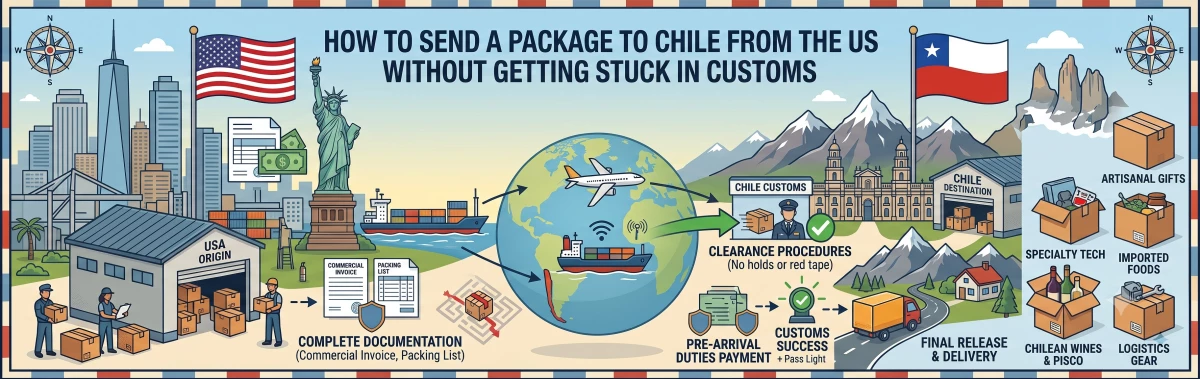
How to Send a Package to Chile from the US Without Getting Stuck in Customs
Sending something across international borders always comes with a bit of uncertainty, and Chile is no exception. Whether you are mailing a gift to family, sending business samples, or relocating personal belongings, the biggest risk to a smooth delivery is not the flight time or the distance. It is customs. A package that looks perfectly fine to you can sit in a warehouse for weeks if the paperwork is wrong, the declared value looks suspicious, or the contents fall under a restricted category. If you want your shipping to Chile from the USA experience to go smoothly, it helps to understand exactly how the process works before you tape up a single box.
This guide walks through why packages get held up, what documentation actually matters, which items commonly cause problems, and how to structure your shipment so it moves through customs without unnecessary delay.
Understanding Why Packages Get Stuck in the First Place
Customs delays rarely happen randomly. In most cases, there is a specific and identifiable reason a package gets flagged for inspection rather than passing through automatically. Understanding these triggers is the first step toward avoiding them.
The most common cause is incomplete or vague documentation. Every international shipment needs a commercial invoice, and Chilean customs officials rely on this document to determine what is inside the box, what it is worth, and whether it requires special permits. When senders write generic descriptions like "gift" or "clothes" without further detail, officials cannot verify the shipment quickly, so it gets pulled aside for manual review. This single issue accounts for a large share of all customs holds.
The second major cause is value discrepancy. Chile, like most countries, applies import duties and taxes once a shipment's declared value crosses a certain threshold. Some senders try to avoid these fees by writing an artificially low value on the invoice. Customs officers are trained to spot undervalued shipments, especially for branded goods or electronics, and when the numbers do not add up, the package gets held until the issue is resolved, sometimes with penalties attached.
The third cause involves restricted or regulated items. Certain products require import permits, health certificates, or additional licensing before they can legally enter the country. If these documents are missing, the shipment cannot be released no matter how accurate the rest of the paperwork is.
Step One: Choose a Carrier That Understands Chilean Customs
Not all shipping providers handle South American customs clearance the same way. Some major couriers have extensive experience with Chilean import regulations and pre-process documentation before the package even leaves the US. Others simply hand off the shipment at the border and let the recipient deal with any issues that arise.
When comparing options for shipping from us to Chile, ask specifically about their customs clearance process. A provider with local partnerships or a dedicated customs brokerage team can often clear shipments faster because they know exactly what Chilean authorities expect to see on an invoice, and they can catch potential red flags before the package is ever shipped.
Step Two: Prepare a Detailed and Accurate Commercial Invoice
This is the single most important document in the entire process. A commercial invoice should list each item individually rather than bundling everything into one line. Instead of writing "assorted items," break it down: one pair of running shoes, one laptop charger, two cotton t shirts, and so on. Each entry should include a realistic value in US dollars and a short but specific description of its purpose.
If the shipment is a gift, say so clearly and note that it holds no commercial value beyond the stated price. If it is a business shipment, indicate that as well, since commercial shipments are sometimes processed under different rules than personal packages. The clearer and more specific your invoice, the less reason customs has to pull your package for a manual check.
Step Three: Know What You Cannot Ship
Before you pack anything, take a few minutes to check Chile's list of restricted and prohibited items. Certain electronics require import permits due to voltage or safety standards. Some food products, plant materials, and seeds are banned outright to protect local agriculture. Medications, even over-the-counter ones, often require documentation proving they are for personal use and not resale.
Shipping a restricted item without the proper paperwork is one of the fastest ways to guarantee a customs hold, and in some cases the package may be returned to sender or destroyed rather than released. A quick check against the current list before shipping saves considerable time and expense later.
Step Four: Declare Value Honestly
It can be tempting to underdeclare a shipment's value to avoid paying import duties, but this strategy tends to backfire. Chilean customs regularly cross-references declared values against market prices, particularly for popular consumer goods and electronics. When a mismatch is found, the package is held, and the sender or recipient may face fines in addition to the original duties owed.
Being upfront about value, even when it means paying some import tax, is almost always faster and cheaper than dealing with a dispute. Many shippers also do not realize that duties are typically only applied above a certain value threshold, so smaller personal shipments may not incur any tax at all.
Buying Products in the US and Having Them Shipped to Chile
A growing number of people want access to American retailers that either do not ship internationally or charge excessive fees when they do. This is where package forwarding services become useful. If you are researching how to buy and ship from us to Chile, the general process works like this: you sign up for a US mailing address through a forwarding company, shop at your favorite US retailers as usual, and have your purchases delivered to that address. Once everything arrives, the company consolidates your items into a single shipment and forwards it to your address in Chile.
This approach is especially popular for electronics, clothing, and specialty products that are difficult or expensive to find locally. Many forwarding companies also handle customs documentation as part of their service, which removes a significant amount of guesswork for shoppers who are not familiar with Chilean import rules.
Packaging Tips That Help Avoid Delays
Beyond documentation, physical packaging plays a role in how smoothly a shipment moves through the system. Fragile items should be clearly marked and properly cushioned, since damaged packaging sometimes prompts inspectors to open a box for a closer look. Labels should be printed clearly and securely attached, since smudged or missing labels can cause processing delays even before the package reaches customs.
It also helps to keep a copy of your invoice and tracking number accessible throughout the shipping process. If customs requests clarification, having this information ready allows you or your shipping provider to respond quickly rather than losing additional days waiting for missing paperwork.
What Realistic Timelines Look Like
Most packages that arrive with accurate documentation clear Chilean customs within a few business days. Shipments that get flagged for manual review, either due to vague invoices, high value electronics, or restricted goods, can take anywhere from one to several additional weeks depending on how quickly the required information is provided.
Setting realistic expectations from the start, and choosing a shipping method that matches your timeline, helps avoid frustration if a package takes slightly longer than the advertised delivery window.
Making the Whole Process Easier
Shipping to Chile does not need to be a stressful guessing game. The senders who avoid customs headaches are almost always the ones who take documentation seriously, declare accurate values, and check restricted item lists before packing. Partnering with a shipping provider that understands Chilean import requirements adds another layer of protection, since experienced carriers often catch potential issues before a package ever leaves the United States.
Ship With Confidence Through Zion Shipping
If you want a hassle-free way to send packages to Chile without worrying about customs delays, missing paperwork, or unexpected fees, Zion Shipping handles documentation, consolidation, and customs compliance from start to finish. Get a shipping quote today and see how easy sending your package to Chile can be.
Also Read: USPS vs Private Couriers for Shipping to Chile: Complete Comparison
Frequently Asked Questions
Q1. How long does it typically take for a package to clear customs in Chile?
Most packages with accurate and complete documentation clear within two to five business days. Packages flagged for manual review due to missing information or high value can take significantly longer.
Q2. What items are prohibited or restricted from being shipped to Chile?
Certain electronics, firearms, some food and plant products, and specific medications are either banned or require special import permits. It is best to check the current restricted items list before shipping anything unfamiliar.
Q3. Will I have to pay import taxes on my package?
If your shipment's declared value exceeds Chile's duty-free threshold, you will be responsible for paying applicable import taxes before the package is released to you.
Q4. Can I track my package while it is going through customs?
Most carriers provide tracking updates showing when a package enters customs, although detailed status information during the inspection process itself can be limited.
Q5. What is the single best way to prevent customs delays?
Providing a clear, itemized commercial invoice with accurate item descriptions and honest values is the most effective way to keep your shipment moving without unnecessary holds.