What Items Are Prohibited from International Shipping? (Country-by-Country List)
International shipping is not as simple as placing an item in a box and sending it overseas. Every country has its own customs laws, import restrictions, and prohibited-product categories that determine what can legally cross its borders. Some items are completely banned, while others may require licenses, permits, inspections, or special approvals before they are allowed into a destination country.
Many shipping delays, customs holds, and shipment rejections happen because senders fail to check import regulations before shipping. Understanding restricted and prohibited goods is one of the most important parts of successful international delivery.
This guide explains common banned products, country-specific restrictions, and the most important shipping rules to understand before sending goods internationally.
Understanding Prohibited vs Restricted Items
There is an important difference between prohibited items and restricted items. Prohibited products are completely banned from import or export, while restricted items may be shipped only under specific conditions or with proper authorization.
Customs authorities inspect shipments based on product type, declared value, destination-country laws, and supporting documentation. Even if a shipping carrier accepts the parcel initially, customs officials may still reject or seize the shipment if the contents violate local regulations.
People searching for prohibited items international shipping often assume there is one universal global list, but every country has its own customs policies and import standards.
Commonly Prohibited International Shipping Items
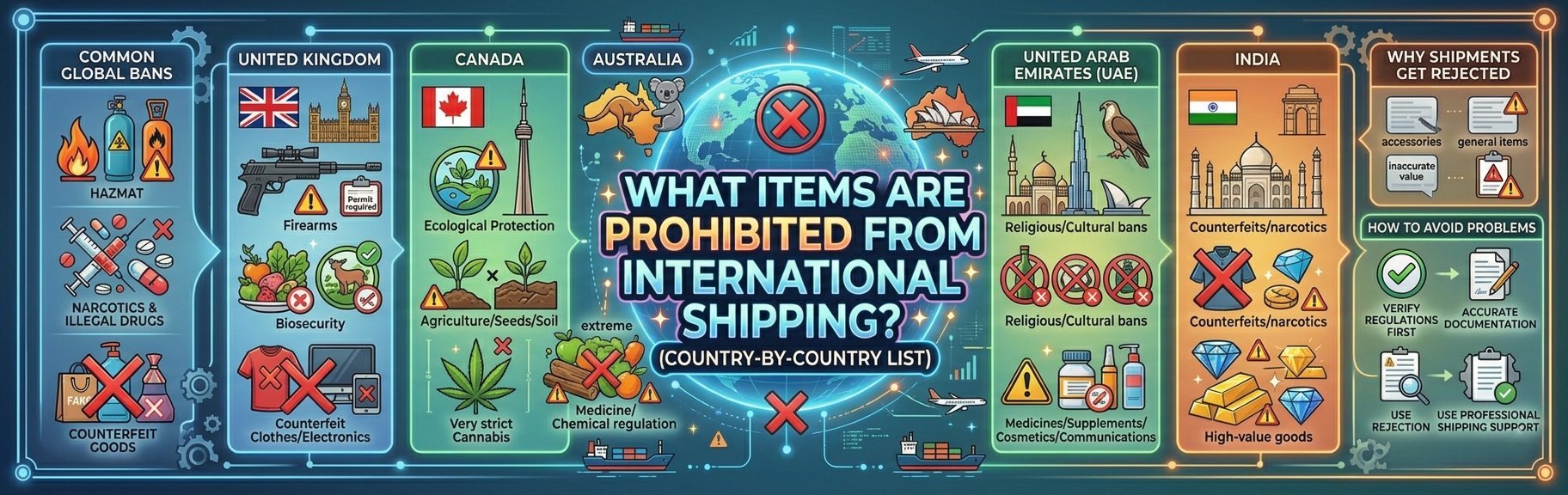
Some categories of products are commonly restricted or prohibited in many countries worldwide. Narcotics, illegal drugs, explosives, counterfeit goods, hazardous chemicals, and dangerous weapons are among the most frequently banned items internationally.
Certain products may also face restrictions because of health, environmental, agricultural, cultural, or security concerns. Food products, medicines, plants, seeds, batteries, alcohol, tobacco, cosmetics, and animal products are often heavily regulated depending on the destination country.
Understanding what can't you ship internationally is essential because customs laws vary significantly between countries and product categories.
United Kingdom Shipping Restrictions
The United Kingdom maintains strict customs controls on various imported products. Firearms, explosives, offensive weapons, counterfeit goods, and certain agricultural products may require licenses or may be prohibited entirely.
Food items, plant materials, and animal-based products are often inspected carefully because of biosecurity regulations. Certain medicines and controlled substances may also require special approvals before import.
The UK also actively enforces intellectual property laws, meaning counterfeit fashion items, fake electronics, and pirated products may be seized during customs inspection.
United Arab Emirates Import Restrictions
The UAE enforces strong customs regulations based on legal, religious, and cultural standards. Narcotics, gambling products, counterfeit goods, and certain restricted media materials are prohibited.
Some products may require approval from UAE authorities before importation. Medicines, supplements, cosmetics, communication devices, and certain electronics may face additional review depending on the shipment category.
Understanding UAE customs rules is especially important because some products considered normal elsewhere may still violate local import laws or public morality standards.
Canada’s Import Rules
Canada places significant restrictions on food products, plants, seeds, animal products, and agricultural materials to protect local ecosystems and prevent disease outbreaks.
Weapons, explosives, fireworks, and controlled substances may also require permits or face import bans. Canada has particularly strict regulations regarding cannabis transportation across international borders.
Many travelers and online shoppers underestimate Canada’s agricultural controls, but even small quantities of food or plant material may trigger customs inspections.
Australia’s Strict Biosecurity Controls
Australia is known for some of the strictest biosecurity laws in the world. Fresh foods, untreated wood products, plant materials, seeds, soil-contaminated goods, and animal products often face heavy import restrictions.
The country also regulates medicines, chemicals, radioactive materials, hazardous substances, and certain industrial products.
Australia’s customs system focuses heavily on protecting agriculture and local ecosystems from pests, diseases, and environmental risks. Even products that appear harmless may require inspection or import approval.
India’s Customs Restrictions
India restricts narcotics, counterfeit products, certain media materials, and controlled substances. Precious metals, high-value electronics, and some luxury goods may also face additional customs procedures or taxes.
Medicines, supplements, and health-related products often receive extra customs scrutiny depending on product classification and declared value.
India also regulates shipments containing gold, silver, gemstones, and products considered commercially sensitive under import regulations.
Why Customs Authorities Reject Shipments
Customs authorities reject shipments for several common reasons. One major issue is inaccurate product descriptions. Vague descriptions like “accessories” or “general items” often trigger customs inspections because authorities cannot properly classify the shipment.
Incorrect declared values also create problems. Undervaluing goods to avoid taxes may result in customs reassessment, delays, or penalties.
Another major reason for shipment rejection is missing permits or incomplete paperwork. Some products require import licenses, certificates, or regulatory approvals before customs clearance can occur.
Anyone dealing with restricted items shipping USA should understand that compliance documentation is just as important as the shipment itself.
Country-Specific Customs Regulations Matter
One of the biggest misconceptions in international shipping is assuming that if an item is legal in the sender’s country, it will also be legal in the destination country.
In reality, customs rules vary dramatically worldwide. Some countries focus heavily on agricultural protection, while others regulate media content, medicines, electronics, luxury goods, or cultural products more strictly.
This is why researching destination-country regulations before shipping is critical for avoiding customs complications.
People often search for banned items customs information after a shipment gets delayed, but the best approach is always prevention rather than correction.
How to Avoid Shipping Problems
The safest way to avoid customs problems is to verify import regulations before purchasing or shipping products internationally. Official customs websites, experienced shipping providers, and destination-country import guidelines are valuable resources for checking restricted categories.
Accurate documentation also plays a major role. Clear product descriptions, proper invoices, honest declared values, and complete recipient details all help customs authorities process shipments more efficiently.
Packaging matters too. Organized packaging makes customs inspections easier and reduces confusion during clearance.
Another important step is avoiding assumptions. Just because a product cleared customs previously does not guarantee the same outcome in the future because import laws and enforcement priorities can change.
Anyone researching what not to ship overseas should always verify the latest customs rules before dispatching international shipments.
Why Professional Shipping Support Helps
International shipping becomes much easier when working with an experienced shipping company familiar with customs regulations worldwide. Professional logistics providers can help identify restricted products, review shipping paperwork, and guide customers through country-specific import procedures.
Experienced shipping teams often recognize potential customs issues before the package is shipped, helping customers avoid delays, returns, confiscations, or unexpected fees.
Professional support is especially valuable for commercial inventory, high-value goods, electronics, supplements, cosmetics, and products shipped regularly across international borders.
Instead of relying on guesswork, many businesses and individuals prefer using shipping providers with customs expertise and international compliance knowledge.
Final Thoughts
International shipping regulations vary significantly from one country to another, which is why checking prohibited and restricted item rules before shipping is essential. Understanding customs restrictions, preparing accurate paperwork, and researching destination-country regulations can help avoid delays, penalties, and shipment rejection.
Whether you are sending personal items, gifts, business inventory, or online purchases, Zion Shipping can help simplify the process with dependable international shipping guidance and customs support. Contact Zion Shipping today to move your shipment confidently and reduce international shipping complications with professional logistics expertise.
Also Read: How to Fill Out a Customs Declaration Form for International Shipping
FAQs
1. What is the difference between prohibited and restricted items?
Prohibited items are completely banned from shipping, while restricted items may require permits, approvals, inspections, or additional documentation before import.
2. Why do countries restrict food and plant products?
Many countries regulate food and agricultural products to prevent pests, diseases, contamination, and environmental risks from entering the country.
3. Can customs seize my shipment?
Yes, customs authorities may seize shipments that contain prohibited products, counterfeit goods, undeclared items, or products violating local import laws.
4. Are customs restrictions the same in every country?
No, every country has different customs laws, import policies, and restricted-product categories based on local regulations and security concerns.
5. How can I avoid customs shipping problems?
Research destination-country regulations, provide accurate paperwork, use clear product descriptions, declare honest shipment values, and work with experienced international shipping providers.