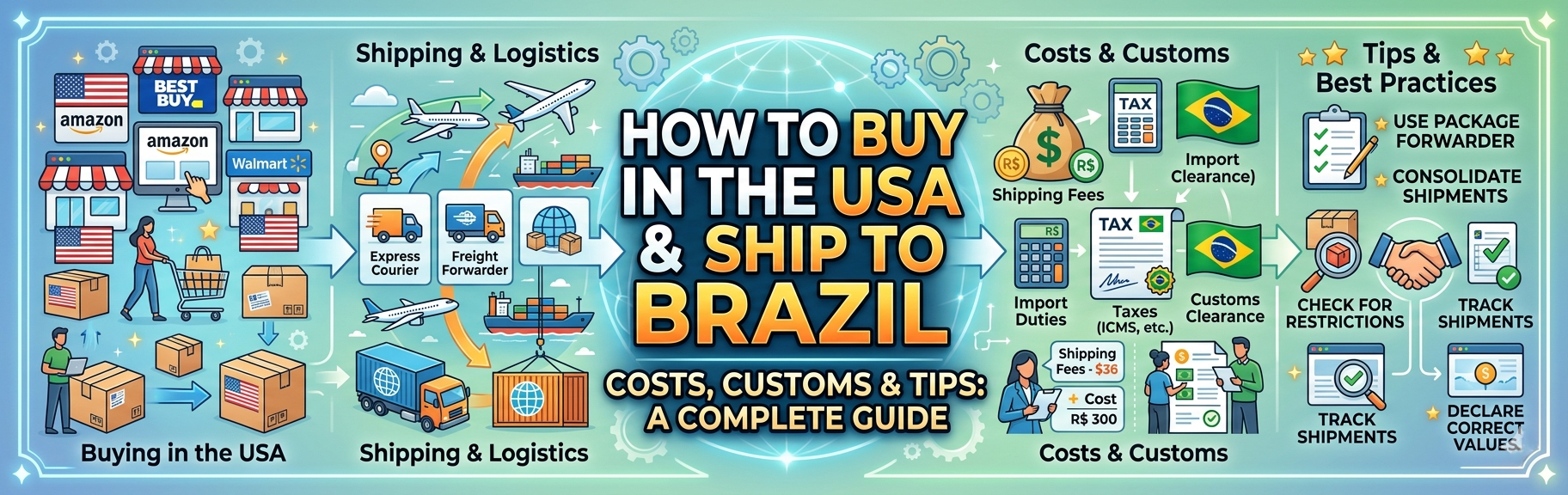
How to Buy in the USA and Ship to Brazil: Costs, Customs & Tips
Buying products in the United States and sending them to Brazil can be a smart way to access more variety, better pricing, and items that are not always easy to find locally. The process is very doable, but it works best when you understand how Brazilian customs treats international shipments, what documents are needed, and which items may be restricted.
The biggest mistake people make is assuming the package will simply “pass through” because it is personal or small. In Brazil, imported items are generally subject to taxation, and customs may review the shipment based on value, contents, and shipping channel. The safest approach is to plan the purchase first, then choose the shipping method, then prepare the paperwork with complete and accurate details.
Understanding How Brazil Treats Imports
Brazil’s customs system is structured around declarations, taxes, and clearance rules that apply to international parcels. International packages are reviewed based on item category, declared value, shipping method, and customs documentation. That means the shipment is not just a delivery process; it is also a customs compliance process.
For postal shipments, imported packages are usually cleared under the Simplified Taxation Regime for lower-value parcels. Customs authorities generally calculate taxes based on the value of the goods, shipping charges, and insurance if applicable.
For anyone looking to ship from US to Brazil, understanding customs requirements early can help avoid delays, extra fees, and unnecessary stress during the shipping process.
What to Know Before You Place the Order
Before buying any product in the United States, it is important to confirm whether the item can legally enter Brazil. Some products are restricted, while others may require special approvals or documentation.
Items such as cosmetics, food, supplements, medicines, electronics with lithium batteries, and luxury goods may receive additional customs attention. Certain categories can also face higher taxes or import restrictions depending on Brazilian regulations.
Planning ahead is one of the most important parts of shipping to Brazil from USA because customs issues usually begin when buyers skip product research or ignore import regulations.
Understanding Taxes and Import Duties
One of the biggest surprises for first-time buyers is the amount of customs duties and taxes applied after the shipment arrives in Brazil. Many people focus only on the product price and forget that import costs can significantly increase the final amount paid.
Brazil generally applies import duties based on the customs value of the shipment. That value often includes the product cost, freight charges, and insurance. Additional state taxes may also apply depending on the shipment type and destination.
This is why it is important to calculate the total landed cost before making a purchase. A product that seems cheap in the United States may become expensive once shipping and taxes are added together.
People searching for the cheapest way to ship to Brazil often discover that the lowest shipping rate is not always the best overall option. A reliable service with proper customs handling can sometimes save more money by reducing delays, storage charges, and clearance issues.
Choosing the Right U.S. Retailer
Not every U.S. retailer handles international orders efficiently. Some stores provide excellent invoices, accurate product descriptions, and proper export documentation, while others may create confusion during customs clearance.
The best retailers are usually the ones that provide detailed order summaries, transparent pricing, and accurate shipping information. Clean documentation makes the customs process smoother because officials can quickly verify the product category and declared value.
If you regularly buy and ship to Brazil, choosing organized and reliable retailers can make the overall experience much easier and more predictable.
Packaging and Documentation Tips
Packaging is one of the most overlooked parts of international delivery. A poorly packed item may arrive damaged or attract unnecessary customs attention if the shipment appears disorganized.
Strong boxes, protective cushioning, and secure sealing are important for international transit. Fragile products should be wrapped carefully to reduce the risk of breakage during handling and transportation.
Documentation matters just as much as packaging. The shipping label, invoice, customs declaration, and recipient details should all match correctly. Vague product descriptions can create customs delays because officers may request additional clarification.
For example, “wireless headphones” is much better than writing “electronics.” A clear description improves transparency and reduces confusion during inspection.
How to Lower Shipping Costs
Reducing shipping costs starts with smart planning. One effective method is choosing compact packaging because oversized boxes often increase dimensional weight charges. Combining multiple items into one shipment may also reduce overall delivery expenses.
Another strategy is selecting the right shipping speed. Express delivery may cost more but could reduce storage delays and customs waiting times. Economy shipping can save money upfront but may increase overall transit time.
Comparing services carefully is important because the total cost includes more than freight alone. Import taxes, customs processing, and handling fees all affect the final amount paid.
Anyone dealing with international shipping Brazil customs requirements should focus on accuracy and preparation instead of searching for shortcuts. Proper documentation usually saves more money than risky customs strategies.
Common Problems People Face
One common mistake is underdeclaring the value of the shipment in an attempt to reduce taxes. This can create serious customs problems, including reassessment, penalties, shipment holds, or returns.
Another issue is shipping prohibited or restricted products without checking regulations first. Customs authorities may seize or reject certain items if they do not meet import standards.
Poor communication with the recipient is another frequent problem. In some cases, the receiver may need to pay import duties before the package is released. Letting the recipient know in advance can prevent confusion and delivery refusal.
Incomplete addresses also create delays. Even if customs clears the shipment quickly, incorrect contact details can slow down final delivery significantly.
Why a Reliable Shipping Partner Matters
International delivery becomes much easier when you work with a shipping company experienced in Brazil-bound shipments. A professional provider can help with customs paperwork, shipping estimates, tracking updates, and packaging recommendations.
Experienced shipping teams understand how Brazilian customs processes work and can help reduce common mistakes before the package even leaves the United States. That support becomes especially valuable for expensive, fragile, or time-sensitive shipments.
A dependable logistics partner also improves communication. Instead of guessing where your package is or why it is delayed, you receive updates and guidance throughout the shipping journey.
Final Thoughts
Buying products in the United States and sending them to Brazil can be a smooth and cost-effective experience when handled correctly. Understanding customs rules, choosing the right shipping service, preparing accurate paperwork, and packing carefully all play a major role in successful delivery.
If you are planning to send personal items, gifts, retail products, or commercial shipments, Zion Shipping can help simplify the process with reliable support and international shipping expertise. Contact Zion Shipping today to move your Brazil shipment with confidence and experience a smoother delivery process from start to finish.
Also Read: How Long Does It Take to Get to Brazil from Major U.S. Cities?
FAQs
1. How long does shipping from the USA to Brazil usually take?
Shipping time depends on the carrier, customs clearance process, and delivery service selected. Express shipping is faster, while economy options may take longer.
2. Are all products allowed to enter Brazil?
No, some products may be restricted or prohibited. Cosmetics, medicines, supplements, batteries, and food items may require additional review or approvals.
3. Why are import taxes high in Brazil?
Brazil applies import duties and taxes based on shipment value, freight charges, and product category. Additional state taxes may also apply.
4. Can customs delay my shipment?
Yes, customs may delay shipments if paperwork is incomplete, values appear incorrect, or restricted products are included in the package.
5. What is the safest way to ship products to Brazil?
The safest method is using a reliable international shipping company that provides proper tracking, customs support, accurate documentation, and secure packaging.