
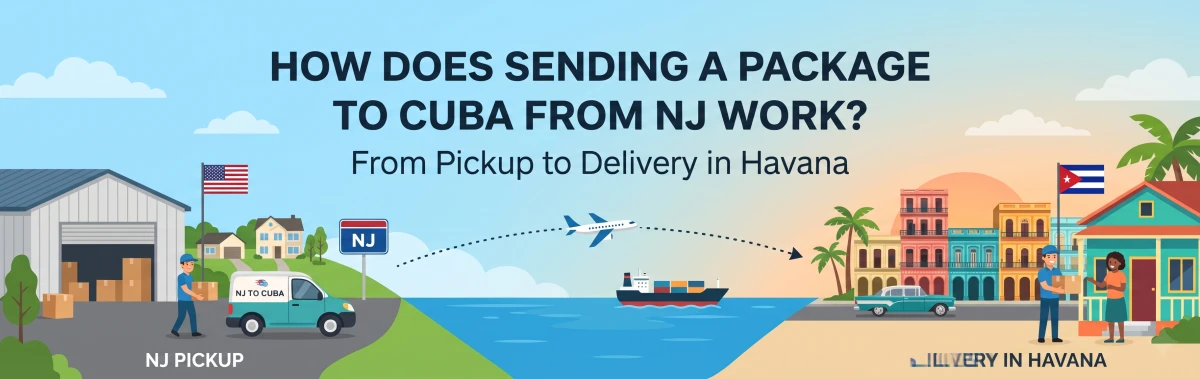
How Does Sending a Package to Cuba from NJ Work? From Pickup to Delivery in Havana
Sending a box, barrel, or pallet to family in Havana can feel confusing the first time. There are rules to follow, forms to complete, and a long journey between your front door and the recipient's. The good news is that the process is much simpler once you see how each stage connects. If you are exploring shipping to Cuba from New Jersey, this guide walks you through the full journey, from the moment a driver picks up your parcel to the moment it lands in your loved one's hands.
New Jersey is one of the best starting points for Cuba-bound cargo. Communities in Elizabeth, Union City, Newark, Hackensack, and Perth Amboy have a large Cuban population and a well-developed network of shipping agencies. That means more pickup options, more competition on price, and plenty of experience handling the paperwork.
Step 1: Decide What You Are Sending
Everything begins with the contents. U.S. regulations allow many humanitarian and family support items, including food, over-the-counter medicine, hygiene products, clothing, shoes, and certain household goods. Other items face restrictions or need a license, such as certain electronics, tools, and items for commercial purposes.
Before you buy anything, make a list of what you plan to pack and confirm it is allowed. Rules change over time, so check current guidance from the Office of Foreign Assets Control and the Commerce Department, or ask your shipping company to confirm. A reputable agency will tell you quickly if something should stay out of the box.
Also think about what your family actually needs. Practical items such as cooking oil, rice, canned goods, vitamins, soap, diapers, and school supplies are almost always welcome and travel well.
Step 2: Choose Your Shipping Method
Most people searching for shipping to Cuba from USA quickly discover there are three main formats.
Boxes and parcels are the most common choice for families. They are easy to pack, simple to price, and ideal for monthly support packages or holiday gifts.
Barrels and drums are a long standing tradition. They hold a lot of goods for a flat price, which makes them popular for bulk food and household supplies.
Pallets and full containers suit large families sending in bulk, community groups, churches, and small businesses.
You will also choose between air and sea. Air freight is faster, with transit often measured in days or a couple of weeks, but it costs more per pound. Sea freight is slower, often several weeks, but it is far more economical for heavy or bulky loads. Your budget and how urgently the recipient needs the items should drive this choice.
Step 3: Book Your Pickup or Drop Off in New Jersey
Once you know what you are sending and how, you book the service. Many people prefer a company that comes to them. If you have ever typed shipping to Cuba near me into a search bar, you were probably looking for an agency with a local pickup route. Good providers run scheduled collection days across North Jersey and the surrounding areas, so a driver can arrive at your home, weigh the package, and take it away.
If you prefer, you can drop your shipment at a local office or warehouse. This often costs less and gives you a chance to ask questions face to face.
Whichever option you pick, be ready to provide your name and address, the recipient's full name, address, and phone number in Cuba, and a clear description of the items. Accuracy matters here. A missing phone number or an incomplete address is one of the most common reasons for delays at the delivery end.
Step 4: Pack Carefully and Label Clearly
Packing is where many shipments succeed or fail. Use strong, new or nearly new boxes, and tape every seam. Wrap fragile items in clothing or padding so they cannot shift. Keep liquids sealed inside plastic bags to prevent leaks, and avoid overfilling, since a bulging box is more likely to split during handling.
Inside the package, include an itemized list of the contents. Outside, attach a label with the recipient's details in Cuba and your sender information. Many agencies provide labels and will also help you pack, which is useful for first-timers.
Weigh your package before booking if you can. Pricing is typically based on weight or volume, and knowing the number in advance helps you avoid surprises.
Step 5: Documentation and U.S. Export Compliance
Every shipment leaving the United States for Cuba must comply with federal export rules. In practice, your shipping company handles much of this, but you will usually need to sign a declaration confirming the contents, the purpose, and that you are authorized to send them.
Expect to provide a valid photo ID. Agencies are required to keep records, and they may ask questions about who the recipient is and how they are related to you. This is routine and meant to keep everyone compliant.
Ask your provider which authorizations apply to your shipment. For example, family support packages, humanitarian donations, and commercial exports each follow different paths. Choosing a company with experience in Cuba-specific compliance protects you from costly errors.
Step 6: Consolidation and Transit
After pickup, your package is brought to a consolidation warehouse, often in New Jersey or Florida. Here, shipments from many senders are sorted, weighed, scanned, and grouped for the next departure.
From there, cargo moves by air or by sea to Cuba. Air shipments generally fly out on scheduled routes, while sea shipments leave on vessels that operate on set sailing dates. Because departures follow a schedule, missing a cutoff can add days or weeks to your timeline, which is why booking early matters, especially before holidays.
During this phase, most reputable companies provide a tracking number or status updates. Keep your receipt and tracking details handy in case you need to follow up.
Step 7: Cuban Customs and Inspection
When your shipment arrives in Cuba, it goes through Cuban customs. Officials may inspect the contents, check them against your declaration, and apply any duties or limits that apply. Cuba sets its own rules on quantities, categories, and values, and those rules can change without much notice.
Certain items, like food and medicine, are commonly allowed within limits, while others may be taxed or held. Items that exceed allowed quantities can be delayed or subject to fees. A knowledgeable agency will advise you on how to structure your package to reduce the chance of problems.
It helps to tell your recipient what is coming so they know what to expect and can respond quickly if customs or the delivery team contacts them.
Step 8: Final Delivery in Havana
Once customs clearance is complete, the package moves to the final delivery stage. Many agencies offer home delivery in Havana and other provinces, while some require the recipient to pick up the package at a designated location.
For home delivery, a local courier brings the package to the address you provided. The recipient is usually asked to show identification and sign for it. Delivery times inside Cuba vary depending on the province, the volume of cargo, and local logistics, so allow some extra time for areas outside the capital.
After delivery, confirm with your family that everything arrived in good condition. If something is missing or damaged, contact your shipping company right away with your receipt and photos.
How Much Does It Cost and How Long Does It Take?
Costs depend on the size, weight, shipping method, and whether you choose pickup or drop-off. Barrels and bulk sea shipments usually give the best value per pound, while express air parcels cost more. Always ask for a full quote that includes pickup fees, handling, and delivery so you can compare providers fairly.
Timelines also vary. As a rough guide, air shipments may take one to three weeks from pickup to delivery, while sea shipments commonly take a month or more. Holidays, weather, and customs backlogs can stretch these estimates, so build in a buffer.
Tips for a Smooth Shipping Experience
- Book early, especially before Christmas, Mother's Day, and school season.
- Double-check the recipient's address and phone number.
- Keep every receipt and tracking number.
- Ask your provider about insurance for valuable items.
- Stay in touch with your family so they know when to expect delivery.
Ready to Send? Choose the Cheapest Shipping Company in New Jersey
If you want reliable service without overpaying, look for a provider that offers transparent pricing, free local pickup, careful handling, and dependable delivery in Havana and across the island. Contact the Cheapest Shipping Company in New Jersey today for a free quote, and let our experienced team handle the pickup, paperwork, and delivery so your family gets their package safely and on time. Call or message us now to schedule your pickup.
Also Read: The Cheapest Ways to Ship Internationally in 2026
Frequently Asked Questions
1. What items can I send to Cuba from New Jersey?
Most families send food, over-the-counter medicine, hygiene products, clothing, and household goods. Some items are restricted or require authorization, so confirm your list with your shipping company before packing.
2. How long does it take for a package to reach Havana?
Air shipments typically take one to three weeks, while sea shipments often take a month or longer. Holidays and customs processing can add extra time.
3. Do I need to be present for pickup in New Jersey?
In most cases, yes, or you can authorize someone at your address to hand over the package. You will usually need to show ID and sign a declaration.
4. Will my recipient have to pay any fees in Cuba?
It depends on the contents and quantity. Items within allowed limits are generally released without trouble, but larger or restricted loads may be subject to duties or delays.
5. Can I track my package to Cuba?
Yes. Reputable companies provide a tracking number or regular status updates so you can follow the shipment from pickup through customs to final delivery.