
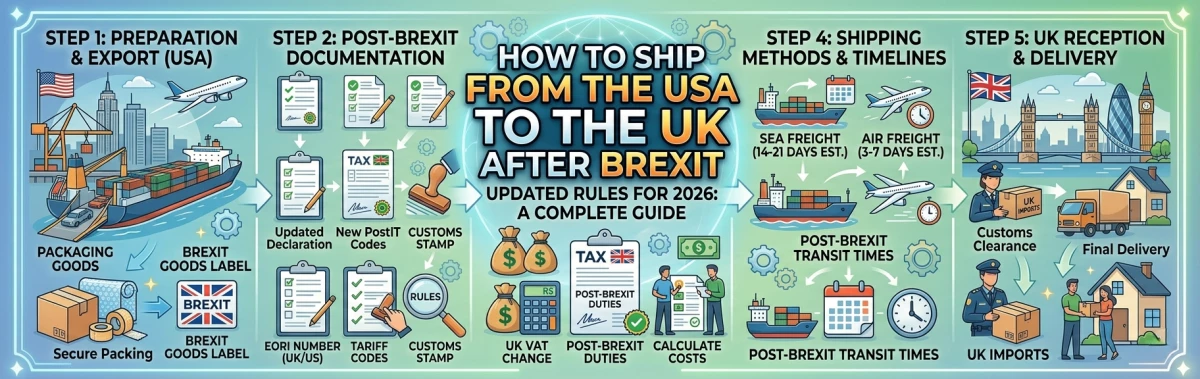
How to Ship from the USA to the UK After Brexit: Updated Rules for 2026
Shipping between the United States and the United Kingdom has changed significantly since Brexit reshaped customs and import procedures. While international delivery between the two countries remains active and efficient, businesses and individuals now need to pay closer attention to customs declarations, import taxes, product restrictions, and shipping documentation than they did before.
In 2026, sending packages to the UK requires more preparation because customs clearance rules are stricter and documentation errors can quickly lead to delays, inspections, or additional charges. Whether you are shipping personal items, gifts, online orders, commercial inventory, or business documents, understanding the updated process can save both time and money.
This guide explains the key Brexit-related shipping changes, how customs procedures work in 2026, what costs to expect, and how to prepare shipments correctly for smooth delivery into the United Kingdom.
Understanding Post-Brexit Shipping Changes
Brexit changed how imports are processed when goods enter the United Kingdom. Customs declarations, tax collection, and import checks became more detailed after the UK left the European Union’s customs framework. Although shipments from the United States were already international, the UK’s updated customs systems and import procedures have created stricter compliance expectations for all overseas shipments.
Today, shipments entering the UK are reviewed more carefully for declared value, product classification, documentation accuracy, and tax eligibility. Customs authorities now place greater emphasis on transparent declarations and accurate paperwork.
Anyone planning to ship from USA to UK should understand that customs compliance is no longer optional background paperwork. It is now one of the most important parts of the international delivery process.
Why Documentation Matters More in 2026
Incorrect paperwork is one of the biggest causes of shipping delays. UK customs authorities require accurate invoices, product descriptions, shipment values, sender information, and recipient details before releasing packages into the country.
Commercial shipments require even more detailed documentation because customs officials use invoices and product classifications to determine taxes and import duties. Vague descriptions such as “accessories” or “general goods” may lead to customs inspections or requests for additional clarification.
The safest approach is always to provide exact product names, quantities, values, and intended use. A shipment with complete paperwork moves through customs much more efficiently than one with incomplete or inconsistent details.
For individuals handling shipping to UK from USA 2026, preparation is the key to avoiding unnecessary customs complications and expensive delays.
Understanding Customs Duties and VAT
One of the biggest adjustments after Brexit has been the handling of import taxes and Value Added Tax (VAT). Depending on the product type and declared value, shipments entering the UK may face customs duties and VAT charges before delivery can be completed.
The recipient may sometimes need to pay these charges before the shipment is released. This often surprises first-time international shippers who assume the shipping fee alone covers the entire delivery process.
Commercial products, luxury items, electronics, fashion goods, and higher-value shipments are more likely to receive customs attention. Even personal shipments can be reviewed if declared values appear inconsistent or incomplete.
Understanding US to UK customs rules Brexit updates is essential because customs procedures now focus heavily on declaration accuracy and proper tax calculation.
Restricted and Regulated Products
Not every item can enter the UK freely. Some products face restrictions, while others may require licenses, certifications, or additional inspection. Food products, supplements, cosmetics, batteries, alcohol, tobacco, medical products, and certain electronics may receive additional customs scrutiny.
Some wooden products, plant-based materials, and animal-origin products may also require special compliance documentation depending on UK import regulations.
Before shipping, it is important to verify whether the item category is permitted. Sending restricted products without checking the rules first can lead to shipment seizure, customs penalties, or returns.
Understanding destination-country regulations before dispatching the package can prevent major shipping disruptions later.
Choosing the Right Shipping Method
Shipping speed, package size, urgency, and budget all affect which service works best for UK-bound shipments. Smaller parcels are commonly shipped through express courier or standard parcel services, while large commercial cargo may require air freight or ocean freight solutions.
Express shipping is ideal for urgent packages because it provides faster customs processing and quicker transit times. Economy shipping may reduce costs but usually involves longer delivery windows.
Businesses shipping products regularly to the UK often prioritize predictable customs handling and reliable tracking over the lowest available rate. A slightly more expensive service can sometimes save money overall by reducing customs delays and delivery disruptions.
People looking to send package USA to United Kingdom should compare total service quality, customs support, transit speed, and reliability instead of focusing only on the initial shipping quote.
Packaging Requirements for UK Shipments
Proper packaging is extremely important for international delivery. Packages traveling internationally go through multiple handling points, warehouses, customs inspections, and transportation systems before reaching their final destination.
Fragile items should be cushioned carefully using protective materials such as foam, bubble wrap, reinforced corners, and sturdy cartons. Heavy items require durable packaging strong enough to withstand long-distance transit.
Labels and shipping documentation should remain clearly visible throughout transportation. Damaged labels or incomplete address information can delay final delivery even if customs clearance is completed successfully.
Neat and professional packaging also creates fewer inspection problems because customs officers can review shipments more efficiently when contents are organized properly.
Common Shipping Mistakes to Avoid
One of the most common mistakes is undervaluing items to reduce taxes. Customs authorities may reassess shipment values if they believe declarations are inaccurate, which can lead to additional charges or shipment holds.
Another frequent issue is incomplete recipient information. Missing postal codes, phone numbers, or apartment details often create final-mile delivery delays.
Shipping prohibited items without checking regulations is another major problem. Customs authorities may hold or reject shipments that fail compliance checks.
Some senders also underestimate how Brexit-related customs changes affect processing times. Even properly documented shipments may require additional review during busy periods or high-volume seasons.
Following proper international shipping UK regulations helps reduce these risks and improves the likelihood of smooth customs clearance.
How Brexit Affects Business Shipments
Businesses exporting products to the UK now face more customs responsibilities than before. Commercial invoices, tax calculations, harmonized product codes, and import declarations must all be handled accurately to avoid delays.
E-commerce sellers are especially affected because online customers expect fast delivery and transparent costs. Unexpected customs fees or long delays can negatively impact customer satisfaction and repeat business.
Companies shipping frequently to the UK often work with experienced logistics providers that understand customs compliance requirements and documentation standards. Professional support becomes especially important when shipping commercial inventory, electronics, retail products, or high-value goods.
Brexit has made cross-border trade more paperwork-intensive, but businesses that adapt properly can still operate efficiently and successfully in the UK market.
Why Professional Shipping Support Matters
International shipping has become more complex after Brexit, particularly for businesses and high-value shipments. Working with an experienced shipping company helps simplify customs compliance, freight coordination, packaging requirements, and tax-related documentation.
A professional logistics partner can help verify paperwork accuracy before dispatch, reducing the likelihood of customs inspections or delays. Experienced carriers also provide tracking support, shipment visibility, and customer assistance throughout the delivery process.
Professional guidance becomes even more valuable when handling fragile products, commercial cargo, urgent deliveries, or shipments requiring additional compliance review.
Instead of navigating customs procedures alone, many businesses and individuals prefer to work with providers that understand the latest UK import regulations and international shipping standards.
Final Thoughts
Shipping from the United States to the United Kingdom after Brexit requires more preparation, better documentation, and closer attention to customs procedures than in previous years. Understanding taxes, packaging standards, restricted items, and customs clearance requirements can help avoid delays and create a smoother shipping experience.
Whether you are sending personal parcels, business inventory, commercial products, or important documents, Zion Shipping can help simplify the process with dependable international shipping support and customs expertise. Contact Zion Shipping today to move your UK shipment with confidence and experience reliable cross-border delivery solutions designed for modern international shipping.
Also Read: How to Ship to Germany from the US Without Overpaying: Expert Tips to Save in 2026
FAQs
1. Has Brexit changed shipping from the USA to the UK?
Yes, Brexit increased customs compliance requirements, documentation standards, and import processing procedures for shipments entering the United Kingdom.
2. Do shipments to the UK require customs declarations?
Yes, all international shipments entering the UK require customs declarations with accurate product descriptions and declared values.
3. Can the recipient be charged import taxes in the UK?
Yes, recipients may need to pay customs duties or VAT depending on the shipment value and product category.
4. What items are commonly restricted when shipping to the UK?
Food products, supplements, batteries, cosmetics, alcohol, tobacco, and certain electronics may face additional customs review or restrictions.
5. How can I reduce delays when shipping internationally to the UK?
Accurate paperwork, proper packaging, correct shipment values, and using an experienced international shipping provider can help reduce customs delays significantly.