How Long Does Shipping from the US to Zimbabwe Take? Transit Times by Carrier
Shipping from the United States to Zimbabwe is not as simple as choosing the cheapest option and waiting for a package to arrive. Transit time depends on the carrier, the shipping method, the route, customs clearance, and even the type of cargo you are sending. Some shipments move quickly through air freight, while others take several weeks because they are moving by sea and then continuing inland through a distribution network.
For businesses, families, and individuals sending parcels or goods to Zimbabwe, knowing the expected delivery window helps with planning, budgeting, and avoiding unnecessary stress. It also helps you choose the right carrier based on urgency. A small urgent parcel and a full commercial load do not travel the same way, and they should not be expected to arrive on the same schedule.
When people search for options to buy and ship from us to Zimbabwe, they are usually looking for a balance between convenience, reliability, and delivery speed. That is where understanding transit times becomes important. The right shipping plan can save time, reduce delays, and make sure your goods are handled properly from pickup to final delivery.
What Affects Shipping Time to Zimbabwe
Transit time is shaped by several moving parts. The first is the shipping method. Air freight is much faster than ocean freight, but it is usually more expensive and better suited for smaller, lighter, or urgent shipments. Sea freight is slower, but it becomes more practical when you are sending heavier goods or large volumes.
The second factor is the carrier’s network. Some shipping companies have stronger international partnerships, more frequent departures, and better customs support. Others may route shipments through multiple hubs, which adds time. Even if two carriers promise service to Zimbabwe, their actual delivery speed can be very different.
The third factor is customs processing. This is one of the most important reasons a shipment takes longer than expected. If documents are incomplete, item descriptions are unclear, or the shipment requires inspection, customs can hold the cargo until everything is verified. Proper paperwork and accurate declarations make a major difference.
The fourth factor is the final destination inside Zimbabwe. Shipments going to major commercial areas may move faster than those headed to remote towns or rural regions. Once cargo lands in the country, it still needs domestic transportation, and that last stretch can affect the total transit time.
Typical Transit Times by Shipping Method
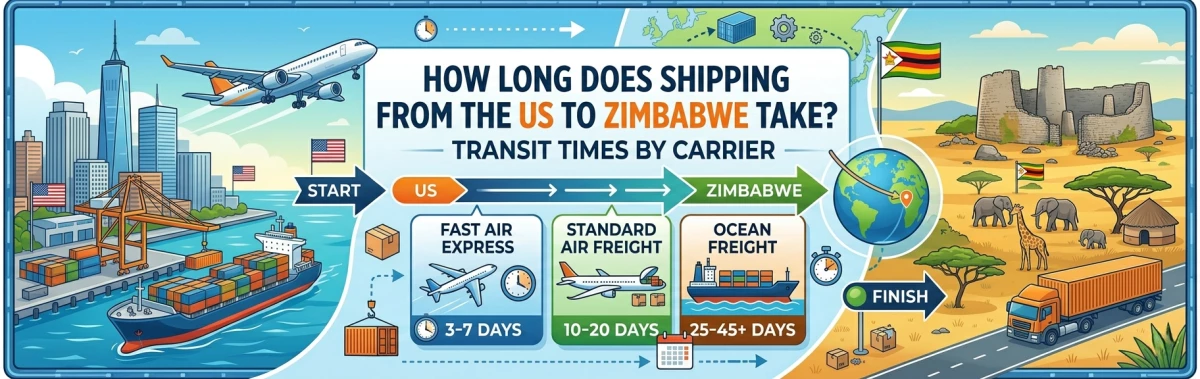
Air shipping is generally the fastest choice for international deliveries. In many cases, a parcel can reach Zimbabwe in about 5 to 12 business days, depending on the carrier and customs clearance. This is usually the best option for urgent documents, small packages, samples, and time-sensitive supplies. Even then, delays can happen if the shipment needs inspection or if flights are less frequent on a specific route.
Ocean freight is slower but more suitable for larger shipments. A shipping container to Zimbabwe often takes several weeks because the cargo must be consolidated, loaded at the port, transported across the ocean, unloaded at the destination port, cleared by customs, and then delivered inland. Depending on the carrier and route, this may take anywhere from 4 to 10 weeks or more.
For larger commercial loads, container shipping to Zimbabwe is often the preferred solution because it allows businesses to move inventory, machinery, household goods, or bulk cargo more efficiently. The tradeoff is time. Sea freight offers better value for volume, but it is rarely the fastest option.
Express courier services sit in the middle for convenience. They are not always the cheapest, but they are often the easiest for small packages because they include pickup, tracking, and streamlined handling. Depending on the service level, these shipments may arrive faster than standard air cargo, though exact timeframes vary by origin city, customs, and service route.
Transit Time by Carrier Type
Large global couriers often provide the most predictable delivery windows for smaller shipments. Their systems are built around tracking, standardized handling, and faster customs coordination. For documents and compact parcels, these carriers can offer the shortest and most consistent transit times.
Air freight forwarders are usually a better fit for larger or more specialized shipments. They can move cargo efficiently, especially when the sender needs flexibility or when the shipment does not fit standard courier dimensions. However, the overall time depends on flight availability, airport processing, and final-mile delivery.
Ocean freight carriers are the slowest but most economical for bulk cargo. Their schedules are based on sailing dates, port operations, and container availability. A delay at any point, whether at the port of origin, during sea transit, or at customs, can extend the journey.
Freight brokers and logistics companies may offer the most practical middle ground because they coordinate the shipment from end to end. Their value is not just in transport, but in helping reduce delays by managing documentation, consolidation, and routing.
Why Customs Can Add Days or Weeks
Customs clearance is often the hidden reason a shipment takes longer than the carrier originally estimated. Even when the shipment arrives on time at the port or airport, it may still sit until the paperwork is reviewed. If descriptions are vague, values look inconsistent, or restricted items are included, customs may ask for clarification.
This is why preparation matters so much. A well-documented shipment with accurate invoices, proper packing lists, and clear item descriptions usually moves more smoothly. If the shipment is for personal use, the sender should still be careful to describe the contents honestly and completely. Good documentation can save days of delay.
How to Plan for a Faster Delivery
The best way to avoid surprises is to choose the shipping method based on your actual timeline. If the goods are urgent, air freight or express courier service is usually the right option. If the shipment is large and cost matters more than speed, sea freight may be the better route. The wrong choice can create frustration, especially when the expected arrival date is important.
It also helps to prepare the shipment before booking. That means measuring and weighing the package accurately, confirming what items are allowed, and checking whether the destination requires additional paperwork. The more organized the shipment is at the start, the less likely it is to get stuck later.
Communication with your carrier is equally important. A good logistics provider should give you a realistic estimate, explain the route, and tell you what may cause delays. This is especially valuable for business shipments, where timing affects sales, inventory, and customer expectations.
What Shippers Usually Want to Know
Most customers care about three things: how long it will take, how much it will cost, and whether the shipment will arrive safely. Transit time matters, but it should never be considered alone. A faster option may be more expensive, while a cheaper option may take longer and require more coordination. The right balance depends on what you are sending and how soon it needs to arrive.
For personal cargo, speed and simplicity often matter most. For commercial shipments, predictability and documentation become more important. In both cases, the carrier you choose should be able to explain the process clearly so you know what to expect from pickup to delivery.
Final Thoughts
Shipping timelines from the US to Zimbabwe vary, but the biggest difference usually comes down to method and preparation. Air freight is the quickest option for smaller shipments, while sea freight is better suited for bulk and heavy cargo. Customs, routing, and final delivery all affect how long the journey takes, so choosing the right logistics partner can make a real difference.
If you are comparing shipping options and need support with timing, documentation, and route planning, Zion Shipping can help you move forward with confidence. Visit Zion Shipping to explore service options, get a shipping quote, and choose the best delivery method for your next shipment to Zimbabwe.
Also Read: How to Buy in the US and Ship to Zimbabwe Without Hassle
FAQs
Q1. How long does shipping from the US to Zimbabwe usually take?
Air shipments often take about 5 to 12 business days, while sea freight can take several weeks, depending on the route and customs clearance.
Q2. Is air freight faster than sea freight to Zimbabwe?
Yes. Air freight is much faster and is usually the best option for urgent parcels, while sea freight is better for large or heavy cargo.
Q3. What slows down international shipping to Zimbabwe?
Customs clearance, incomplete paperwork, route congestion, carrier schedules, and final delivery location can all add extra time.
Q4. Can I track my shipment to Zimbabwe?
Most carriers and freight providers offer tracking, although the level of detail may vary depending on the shipping method.
Q5. Which shipping option is best for large cargo?
Sea freight is usually the most practical option for large cargo because it is more cost-effective than air shipping, even though it takes longer.